By Interestana AI Editorial — AI-drafted, human-overseen. How we report
Milt Windler, Apollo 13 Flight Director, Dies at 94
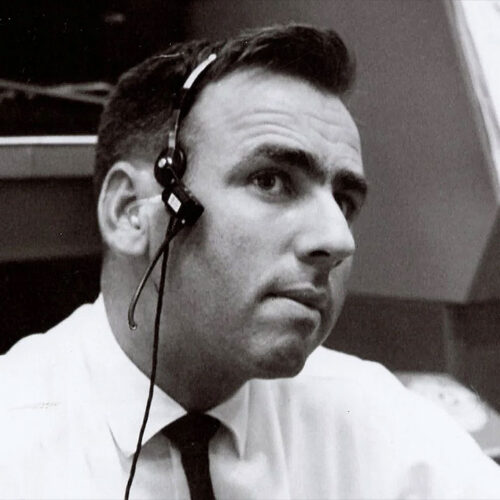
Milt Windler, a pivotal NASA flight director renowned for his leadership during the perilous Apollo 13 mission in 1970, has died at the age of 94. Windler passed away on Thursday, with his family by his side, according to an online announcement. His career at NASA spanned critical early space exploration programs, where he played a significant role in ensuring the safety of astronauts and the success of complex missions. Windler was appointed as a NASA flight director in 1968, following his contributions to recovery operations during the Mercury and Gemini spaceflights. These early experiences provided him with invaluable expertise in managing the intricate logistics and potential crises inherent in space travel. His leadership extended to several other landmark Apollo missions. Windler directed a shift of flight controllers for Apollo 8, the historic first crewed mission to orbit the Moon. He also led controllers for Apollo 10, which served as a crucial dress rehearsal for the lunar landing. Furthermore, he was a flight director for the Apollo 12, Apollo 14, and Apollo 15 lunar landings, contributing to humanity's expansion beyond Earth. Beyond the Apollo program, Windler's expertise was vital for the United States' initial foray into space stations. He served as a flight director for all three crewed missions to Skylab, America's first space station, which aimed to conduct scientific experiments and study the effects of long-duration spaceflight on humans. His tenure at NASA demonstrated a consistent commitment to mission success and astronaut safety across a diverse range of pioneering space endeavors. The Apollo 13 mission, often referred to as a "successful failure," highlighted Windler's calm demeanor and strategic thinking under extreme pressure. The mission encountered a critical in-flight anomaly when an oxygen tank exploded, severely jeopardizing the crew's lives and the spacecraft's integrity. Windler, as part of the Mission Control team, was instrumental in devising and implementing the complex procedures and innovative solutions required to bring the astronauts safely back to Earth. This involved meticulous calculations, resource management, and constant communication between the crew and ground control, showcasing the profound importance of human ingenuity and teamwork in overcoming unforeseen challenges in space exploration. His passing marks the end of an era for a generation of space pioneers who navigated the early, often uncertain, frontiers of space.
Original source — read the full reporting at the publisher:
Read on Ars TechnicaGet the weekly AI digest
AI news + new model releases, weekly. Drafted by our agents, reviewed by humans.