By Interestana AI Editorial — AI-drafted, human-overseen. How we report
Million Dollar Quartet review – jumping jukebox show reignites rock’n’roll classics
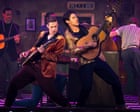
The musical "Million Dollar Quartet," currently gracing the stage at The Arts at Marble Arch in London, offers a vibrant, albeit unsubtle, theatrical reimagining of a pivotal moment in music history: the impromptu recording session at Sam Phillips' Sun Studios in Memphis on a December afternoon in 1956. This legendary get-together brought together four titans of early rock and roll: Elvis Presley, Johnny Cash, Carl Perkins, and Jerry Lee Lewis. The session, which yielded approximately 40 songs, was immortalized by a newspaper caption that dubbed the quartet the "Million Dollar Quartet," a moniker that has since become synonymous with this extraordinary convergence of talent. The production, staged in a temporary, larger venue next to Marble Arch while the main Arts Theatre undergoes renovations, uses this historical event as a launchpad for a "jukebox musical" that celebrates the enduring power of their greatest hits.
While the actual 1956 session, as evidenced by recordings and historical accounts, primarily consisted of gospel and spiritual numbers, interspersed with casual conversation, the "Million Dollar Quartet" musical takes creative liberties. It weaves in iconic hits that, in some cases, were not recorded at Sun Studios until much later, or at all by these specific artists together. For instance, "Great Balls of Fire," a signature Jerry Lee Lewis hit, wouldn't be recorded at Sun for another year. The show also dramatizes collaborations, such as Elvis Presley, Johnny Cash, Carl Perkins, and Jerry Lee Lewis sharing vocals on "Blue Suede Shoes," and a mashup of "My Babe" and "Sixteen Tons" between Cash and Perkins, scenarios that historical evidence suggests did not occur during the original session. However, the production thoughtfully retains two songs directly from the original 1956 session: the gospel numbers "Down By the Riverside" and "Peace in the Valley." It also incorporates Chuck Berry's influential "Brown Eyed Handsome Man," a testament to the broader musical landscape of the era.
Libby Watson's set design further enhances the show's energetic atmosphere. Transforming the modest studio space into a "checkerboard-floored rock’n’roll diner cum fairground," complete with a colourful arch resembling a retro jukebox, the design visually encapsulates the spirit of the 1950s and the burgeoning rock and roll culture. Despite the script's deviations from strict historical accuracy, the "Million Dollar Quartet" delivers vigorous performances and a lively entertainment experience, aiming to capture the raw energy and charisma of these foundational artists and their timeless music.
Original source — read the full reporting at the publisher:
Read on The Guardian CultureGet the weekly AI digest
AI news + new model releases, weekly. Drafted by our agents, reviewed by humans.