By Interestana AI Editorial — AI-drafted, human-overseen. How we report
Mike Rowe Warns of Tradesperson Shortage: 5 Retire, 2 Replace
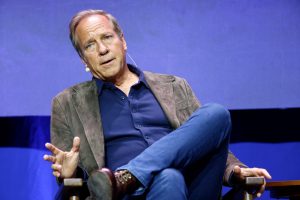
Mike Rowe has articulated a stark reality regarding America's skilled tradesperson shortage, emphasizing that the nation is losing experienced workers at a rate far exceeding new entrants. During a Ford Pro Accelerate panel focused on workforce development, Rowe stated, "For every five tradespeople who retire this year, two replace them." He underscored the mathematical certainty of this deficit, asserting, "I don’t care how you vote. I don’t care what your politics are. Math doesn’t care either." This observation served as a springboard for a broader discussion involving U.S. Secretary of Education Linda McMahon and Michael Duffey, Undersecretary for Acquisition and Sustainment at the U.S. Department of Defense. The conversation challenged the traditional dichotomy between college education and career training, suggesting that the terms "blue-collar" and "white-collar" are becoming obsolete in describing current and future employment needs. Rowe proposed "purple" as a more fitting descriptor for the evolving workforce.
Rowe characterized the skilled labor shortage not as a typical hiring difficulty but as a "real, wide, getting wider, and dangerous" problem. He attributed this widening gap to demographic shifts, with a significant number of seasoned tradespeople retiring while fewer young individuals are entering critical fields such as welding, electrical work, plumbing, advanced manufacturing, and industrial maintenance. The immediate consequences of this shortage are felt in everyday life, as Rowe illustrated with rhetorical questions about wait times for essential services like plumbing and electricity restoration. The implications extend beyond domestic convenience, significantly impacting sectors vital to national interests.
The deficit in skilled trades is increasingly affecting manufacturing and national defense capabilities. Rowe cited the submarine industrial base as a critical example, noting shortages of essential personnel like welders and electricians at a time when the United States is endeavoring to scale up production capacity. This situation highlights the national security implications of an insufficient trades workforce. The discussion also touched upon the need for a re-evaluation of educational pathways, moving away from a perception of college and vocational training as mutually exclusive options. The panel suggested that a more integrated approach is necessary to prepare individuals for the demands of modern industries and to ensure the nation's infrastructure and defense remain robust.
The Ford Pro Accelerate panel, which included discussions with Secretary McMahon and Undersecretary Duffey, aimed to foster a deeper understanding of the workforce development challenges facing the United States. The conversation underscored the urgency of addressing the tradesperson shortage by promoting career training and re-framing perceptions of skilled labor. The participants explored how educational institutions and industry leaders can collaborate to create more effective pipelines for training and recruitment, ensuring that the country can meet its future labor demands across all sectors, from essential services to advanced manufacturing and defense.
Original source — read the full reporting at the publisher:
Read on FortuneGet the weekly AI digest
AI news + new model releases, weekly. Drafted by our agents, reviewed by humans.