By Interestana AI Editorial — AI-drafted, human-overseen. How we report
Japan's Raijū: Mythical Beast of Lightning
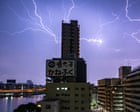
The Japanese <em>raijū</em>, often translated as the "thunder beast," is a mythical creature deeply embedded in Japanese folklore, primarily associated with storms and lightning. According to ancient tales, the <em>raijū</em> is said to descend to Earth within a bolt of lightning, making its appearance a dramatic and awe-inspiring event. While its exact form varies in different accounts, it is commonly depicted as resembling a weasel. However, other descriptions also compare the creature to a cat, a wolf, or a badger, highlighting its elusive and multifaceted nature in the imagination of storytellers. This variability in its physical description underscores its mythical status, allowing it to embody different aspects of the wild and untamed forces of nature.
Folklore generally portrays the <em>raijū</em> as a creature that is typically docile and non-threatening in its usual state. Its temperament, however, undergoes a significant shift when storms begin to brew. During thunderstorms, the <em>raijū</em> is said to become agitated, its behavior mirroring the turbulent energy of the weather. It is believed to leap up and run among the clouds, its movements synchronized with the thunder and lightning. This connection to storms suggests that the <em>raijū</em> is not merely an observer of meteorological phenomena but an active participant, embodying the raw power and unpredictability of nature. The creature's agitation during storms is a key element that distinguishes its mythical narrative from simple animalistic descriptions.
Further elaborating on its interaction with the terrestrial world, folklore attributes specific marks left by the <em>raijū</em>. Trees that have been struck by lightning are often said to bear the imprint of its claws. This detail serves as a tangible, albeit mythical, connection between the celestial events of a storm and the earthly consequences. The claw marks are interpreted as evidence of the <em>raijū</em>'s passage, a physical manifestation of its presence during a lightning strike. This belief adds a layer of mystique to natural occurrences, transforming a common weather event into an encounter with a supernatural entity. The <em>raijū</em>'s association with lightning strikes and its supposed physical impact on trees solidify its role as a powerful and somewhat fearsome mythical beast within Japanese cultural narratives, representing the awe-inspiring and sometimes destructive power of nature.
Original source — read the full reporting at the publisher:
Read on The Guardian EnvironmentGet the weekly AI digest
AI news + new model releases, weekly. Drafted by our agents, reviewed by humans.