By Interestana AI Editorial — AI-drafted, human-overseen. How we report
Ontario Premier Ford Rejects Trump's 'Lake America' Decree
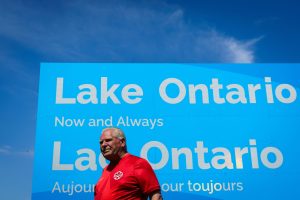
Ontario Premier Doug Ford responded to U.S. President Donald Trump's executive order to rename Lake Ontario as "Lake America" by unveiling a prominent, billboard-sized sign on the Canadian shoreline that reads "Lake Ontario. Now and Always.". The sign, measuring 24 by 12 feet (7.3 by 3.6 meters) and standing approximately 18 feet (5.5 meters) high, was displayed near Grimsby, Ontario, and also featured the message in French. Premier Ford, wearing a Team Canada soccer jersey, posed for photographs with the sign, symbolizing a direct rebuttal to the U.S. president's decree.
This act of defiance follows a period of escalating trade disputes and political rhetoric between Canada and the United States under the Trump administration, including tariffs and threats regarding Canada's sovereignty. The "Lake America" decree has been widely met with ridicule in Canada, with many viewing it as an absurd overreach. Premier Ford articulated this sentiment, stating that President Trump's attempt to rename the lake was a consequence of Canada "standing up for ourselves." He further asserted that the name "Lake Ontario" would endure long after President Trump's tenure, emphasizing the historical and geographical permanence of the existing name over presidential decrees. The dispute highlights a broader pattern of perceived U.S. attempts to assert dominance over Canadian affairs.
Other Canadian political figures have also voiced their disapproval and amusement. Manitoba Premier Wab Kinew drew a parallel between President Trump's actions and a fading rock band attempting to revive past glories, referencing a previous executive order that renamed the Gulf of Mexico to "Gulf of America." Kinew characterized these moves as attempts to appeal to Trump's base by playing on nostalgic themes, but suggested that such efforts are perceived as "sad" and "not his best work" by the broader public. The political commentary underscores a sentiment of exasperation and disbelief regarding the U.S. president's approach to international relations and territorial naming conventions.
Beyond political figures, Canadian historian Robert Bothwell offered a particularly sharp critique, questioning the seriousness with which such pronouncements are treated in the United States. While acknowledging the humorous aspects of the situation, Bothwell also pointed to a more serious underlying concern: that President Trump's actions represent a broader agenda "to subordinate Canada." This perspective suggests that the renaming of geographical features is not merely an isolated incident but part of a more significant geopolitical strategy aimed at diminishing Canadian autonomy and asserting U.S. influence. The dispute, therefore, transcends a simple naming controversy, touching upon issues of national sovereignty and bilateral relations.
Original source — read the full reporting at the publisher:
Read on FortuneGet the weekly AI digest
AI news + new model releases, weekly. Drafted by our agents, reviewed by humans.