By Interestana AI Editorial — AI-drafted, human-overseen. How we report
‘Living fossil’: the blue-blood arthropod that has changed little in 445m years
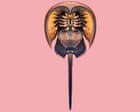
The horseshoe crab, an arthropod often dubbed a 'living fossil,' stands as a testament to evolutionary resilience, having maintained its fundamental appearance for an extraordinary 445 million years. This remarkable lineage predates the age of dinosaurs, tracing its origins back to the Silurian period, making it one of the planet's most ancient and enduring species. Its survival through multiple mass extinction events, which have decimated countless other life forms, underscores its exceptional adaptability. Visually, horseshoe crabs are characterized by a distinctive, helmet-like carapace, a feature so pronounced that their Japanese name, 'kabuto-gani,' directly translates to 'helmet crab.' Beyond their ancient lineage and unique morphology, horseshoe crabs play an indispensable, albeit indirect, role in contemporary human health. Their blood, which is a striking blue due to the presence of copper-based hemocyanin instead of the iron-based hemoglobin found in vertebrates, possesses unique and potent clotting properties. This characteristic is the cornerstone of a critical medical diagnostic test known as the Limulus Amebocyte Lysate (LAL) assay. The LAL test is specifically designed to detect bacterial endotoxins, which are fever-inducing lipopolysaccharides released from the cell walls of Gram-negative bacteria. The LAL assay is an absolutely vital component in ensuring the safety and sterility of a wide array of medical products, including injectable drugs, vaccines, intravenous solutions, medical devices, and surgical equipment. Any product intended for parenteral administration – meaning it bypasses the digestive tract and enters the bloodstream directly – must undergo rigorous LAL testing to confirm the absence of harmful endotoxins. Without the unique properties of horseshoe crab blood, the development, manufacturing, and widespread availability of numerous life-saving medical treatments and technologies would be severely compromised, highlighting the profound and often unacknowledged impact of this seemingly unassuming invertebrate on global public health. The conservation status of horseshoe crabs is a matter of increasing concern. Populations are facing significant threats from a combination of factors, including habitat loss due to coastal development and pollution, as well as over-harvesting, primarily for their blood, which is a valuable commodity for the biomedical industry. While efforts are underway to develop synthetic alternatives to the LAL test, the natural resource remains indispensable for the pharmaceutical and medical industries at present. Consequently, the continued survival of the horseshoe crab is not only a matter of significant ecological importance but also a critical determinant in maintaining the safety, efficacy, and accessibility of modern medicine.
Original source — read the full reporting at the publisher:
Read on The Guardian EnvironmentGet the weekly AI digest
AI news + new model releases, weekly. Drafted by our agents, reviewed by humans.