By Interestana AI Editorial — AI-drafted, human-overseen. How we report
Bitcoin Sell-Off From $65,000 Shows Thin Volume, Not Panic
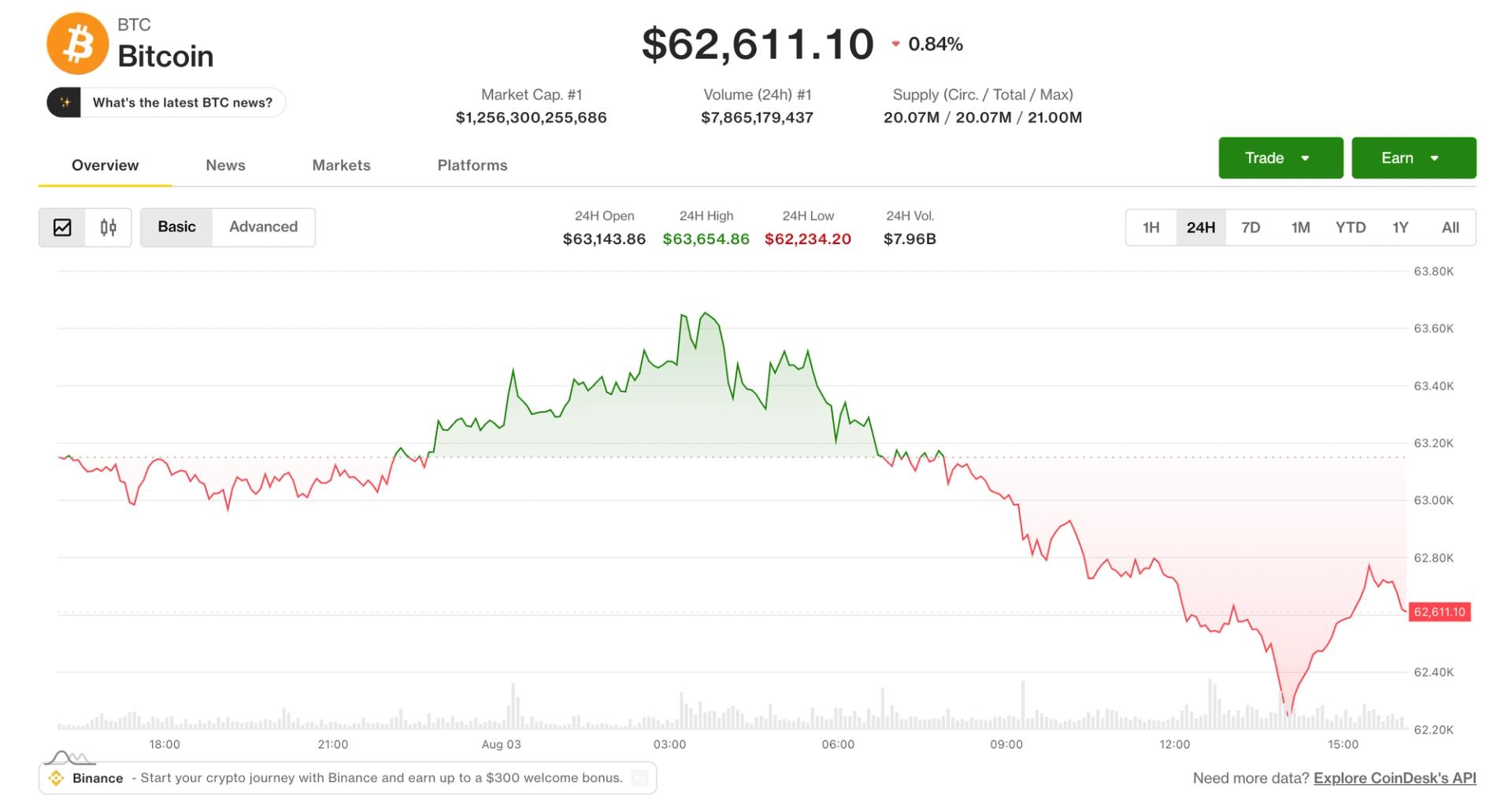
Bitcoin experienced a notable sell-off from its $65,000 mark, a movement that traders and analysts are attributing to a lack of robust trading volume rather than widespread panic selling. Yusuf Fakhro, a representative from ARP Digital, stated that the cryptocurrency's weakness is indicative of stalled market participation. This observation is supported by several key indicators. Exchange-Traded Fund (ETF) flows have recently turned negative, suggesting a decrease in institutional investment entering the market through these regulated products. Furthermore, the open interest on the Chicago Mercantile Exchange (CME), a significant venue for Bitcoin futures trading, has receded to levels last seen in 2023. This indicates a reduction in the number of outstanding derivative contracts, which can correlate with lower trading activity and reduced speculative interest. The CME Bitcoin futures market is a crucial barometer for institutional sentiment and trading depth. When open interest declines, it often signifies that fewer participants are actively engaging in futures contracts, either by opening new positions or rolling over existing ones. The current levels suggest a cooling off from previous periods of heightened activity. Compounding these observations, the "Strategy" indicator, which likely refers to a proprietary trading or sentiment metric used by ARP Digital, has remained idle for five consecutive weeks. An idle strategy suggests a lack of clear directional conviction or a period of consolidation where significant price movements are not being driven by active trading strategies. This prolonged inactivity further supports the notion that the current market conditions are characterized by low participation. The implication of thin volume is that a smaller number of trades can have a more pronounced impact on price. Therefore, the downward price movement from $65,000 may not reflect a fundamental shift in market sentiment or a mass exodus of investors, but rather the amplified effect of limited buying or selling pressure. This scenario is distinct from panic selling, which typically involves a rapid and broad liquidation of assets driven by fear and a desire to exit positions quickly, often accompanied by high trading volumes. The current situation, as described by Fakhro and supported by the cited metrics, points towards a market that is less liquid and experiencing a pause in momentum rather than a crisis of confidence. The return of CME open interest to 2023 levels is particularly significant, as it suggests a normalization of trading activity after potential peaks seen in late 2023 or early 2024. Negative ETF flows, while a concern for some, can also be a temporary phenomenon influenced by broader market sentiment or specific fund performance. The combination of these factors paints a picture of a market that is currently experiencing a technical correction driven by reduced liquidity, rather than a fundamental breakdown in investor confidence. This distinction is crucial for understanding the underlying health and future trajectory of Bitcoin's price action.
Original source — read the full reporting at the publisher:
Read on CoinDeskGet the weekly AI digest
AI news + new model releases, weekly. Drafted by our agents, reviewed by humans.