By Interestana AI Editorial — AI-drafted, human-overseen. How we report
Bitcoin Drops Below $83,000 Amid Geopolitical and Economic Concerns
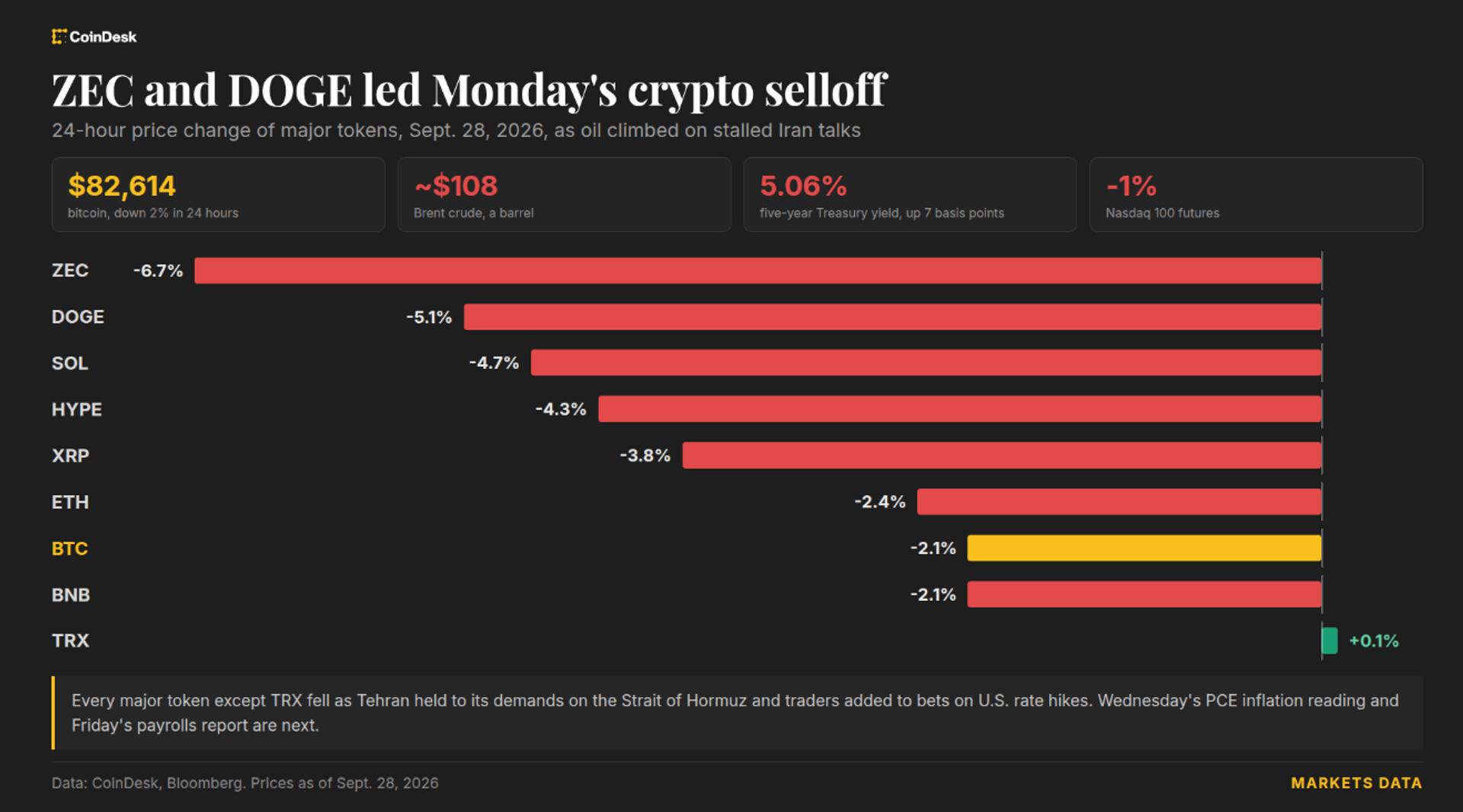
Bitcoin experienced a significant price decline, falling below the $83,000 mark on [Date of Article Publication]. This downturn occurred amidst a confluence of unfavorable market conditions, including stalled diplomatic talks involving Iran and a notable increase in crude oil prices. Brent crude oil futures, a key global benchmark, were observed pushing towards the $108 per barrel level, signaling rising energy costs and potential inflationary pressures. This surge in oil prices, often linked to geopolitical instability, contributed to broader market anxieties.
Adding to the bearish sentiment for Bitcoin and other digital assets, traders were increasing their wagers on the likelihood of another interest rate hike by the U.S. Federal Reserve. This anticipation of tighter monetary policy ahead of crucial economic data releases, specifically inflation and jobs figures scheduled for release this week, typically dampens investor appetite for riskier assets like cryptocurrencies. Higher interest rates make traditional, less volatile investments more attractive and can reduce the capital available for speculative ventures. Zcash (ZEC), a privacy-focused cryptocurrency, was identified as leading the losses among major tokens, reflecting a broader sell-off across the digital asset market. The performance of ZEC often serves as an indicator of sentiment within the altcoin space, suggesting that the negative pressures were widespread.
The interconnectedness of global markets means that events in one sector, such as rising oil prices due to geopolitical tensions, can have ripple effects across others. The potential for increased inflation, driven by higher energy costs, directly influences central bank policy decisions. The Federal Reserve's stance on interest rates is a critical factor for all asset classes, and the market's interpretation of upcoming economic data is paramount. Investors closely monitor inflation reports and employment statistics to gauge the health of the economy and predict future monetary policy actions. The current environment, characterized by geopolitical uncertainty and hawkish monetary policy expectations, creates a challenging backdrop for Bitcoin and other cryptocurrencies, which have historically demonstrated sensitivity to macroeconomic shifts and investor risk tolerance. The decline below $83,000 represents a significant technical level, and its breach could signal further downward pressure if these underlying concerns are not alleviated. The market's reaction underscores the ongoing debate about Bitcoin's role as a safe-haven asset versus its classification as a speculative technology investment, particularly in times of heightened global uncertainty and economic recalibration.
Original source — read the full reporting at the publisher:
Read on CoinDeskGet the weekly AI digest
AI news + new model releases, weekly. Drafted by our agents, reviewed by humans.