By Interestana AI Editorial — AI-drafted, human-overseen. How we report
Bitcoin Drops Below $84,000 Amid Inflation Data and Earnings
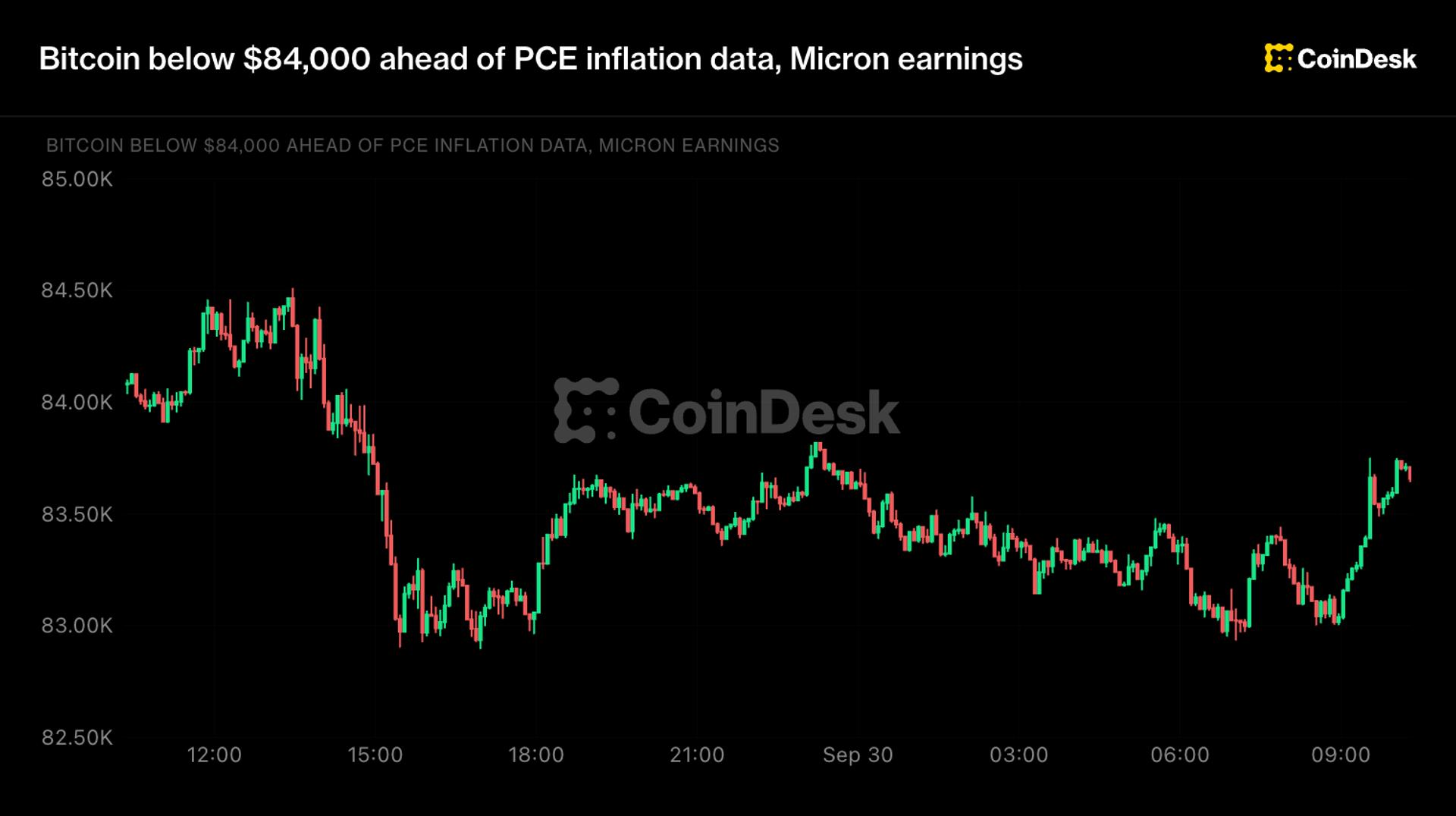
Bitcoin's price experienced a significant decline, trading below the $84,000 mark as market participants braced for the release of crucial economic indicators. This downturn occurred ahead of the anticipated Personal Consumption Expenditures (PCE) inflation data, which is closely monitored by the Federal Reserve as its preferred measure of price pressures. The anticipation of this report has injected a degree of caution into the cryptocurrency market, with investors seeking clarity on the future trajectory of interest rates.
Adding to the market's volatility, investors were also focused on the earnings reports from major corporations, including semiconductor manufacturer Micron. Positive or negative surprises in these earnings can have ripple effects across broader financial markets, influencing investor appetite for riskier assets like Bitcoin. The recent market environment has been characterized by heightened sensitivity to macroeconomic news, with oil price fluctuations previously driving speculation about potential interest rate hikes by the Federal Reserve. These rate-hike bets had pushed 30-year Treasury yields to their highest levels since 2002, underscoring the prevailing economic uncertainty.
The cryptocurrency market's reaction to these economic signals highlights its increasing correlation with traditional financial markets. As institutional adoption of digital assets grows, their price action often mirrors broader market sentiment influenced by inflation data, central bank policy, and corporate performance. The PCE inflation data, in particular, is expected to provide insights into whether inflationary pressures are abating or persisting, which will directly inform the Federal Reserve's monetary policy decisions. A higher-than-expected inflation reading could reinforce expectations of continued restrictive monetary policy, potentially dampening demand for assets like Bitcoin. Conversely, a cooler inflation report might fuel optimism for potential rate cuts later in the year, which could be a tailwind for cryptocurrencies.
Micron's earnings report is also a significant event for the technology sector and the broader economy. As a key player in the memory and storage market, Micron's financial results can offer a barometer for the health of the semiconductor industry, which is foundational to many technological advancements, including those in artificial intelligence and data processing. The performance of such companies can influence investor confidence in technology-related investments, including those that might indirectly support the digital asset ecosystem. The confluence of these economic and corporate events creates a complex trading environment for Bitcoin, where price movements are dictated by a multitude of interconnected factors.
The current price action below $84,000 represents a notable shift from recent trading ranges, indicating that market participants are actively reassessing their positions in light of the incoming data. The coming days will be critical in determining whether Bitcoin can regain upward momentum or if further declines are in store, contingent on the economic signals that emerge and their interpretation by the Federal Reserve and the wider investment community. The interplay between inflation expectations, monetary policy, and corporate profitability will continue to shape the narrative for Bitcoin and other digital assets.
Original source — read the full reporting at the publisher:
Read on CoinDeskGet the weekly AI digest
AI news + new model releases, weekly. Drafted by our agents, reviewed by humans.