By Interestana AI Editorial — AI-drafted, human-overseen. How we report
LinkedIn Algorithm Targets AI-Generated Content Slop
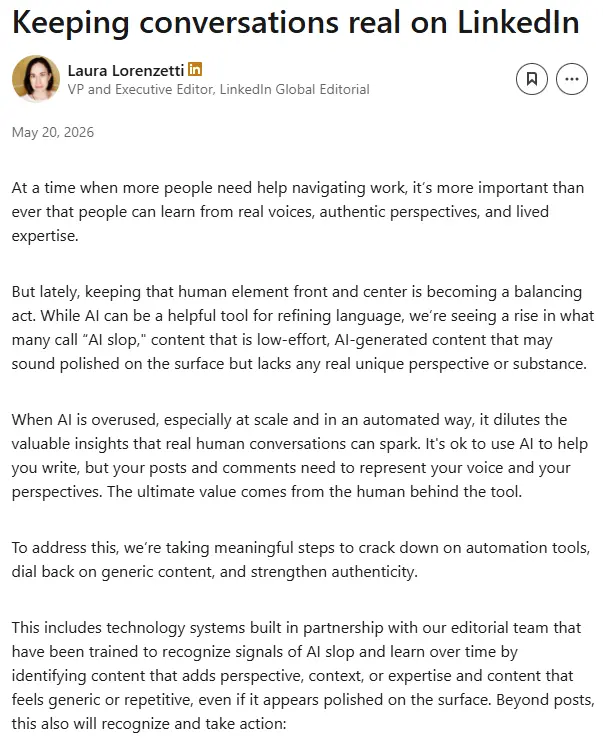
LinkedIn announced significant algorithm changes on May 20, 2026, aimed at curbing the proliferation of low-quality, AI-generated content on its platform. The social networking service is now actively suppressing posts, comments, and automation tools identified as "AI slop," which is characterized as generic, polished-sounding, and lacking original perspective or meaningful contribution. This crackdown, detailed in a blog post by LinkedIn VP of Product Laura Lorenzetti, means that content flagged as AI slop will not be removed but will see its distribution severely limited. Such content will remain visible to a user's immediate network of connections and followers, but it will be excluded from the platform's broader recommendation engine, thereby curtailing its potential reach for brand awareness and thought leadership.
LinkedIn's detection systems are reported to achieve 94 percent accuracy in identifying generic AI content. However, the platform has not disclosed data regarding potential false positives, which could impact legitimate content creators. The move comes as content creation on LinkedIn has surged by 14 percent year over year, a growth largely attributed to the increasing use of AI-assisted creation tools. The platform itself has contributed to this trend by integrating AI writing tools directly into its product offerings, inadvertently fostering the environment it is now trying to regulate. The company's strategy appears to be a response to the growing challenge of maintaining content quality and user engagement amidst an influx of automated and unoriginal material.
Despite the crackdown on "AI slop," LinkedIn emphasizes that AI-assisted content is still welcomed and encouraged if it incorporates original perspectives, demonstrates expertise, or offers genuine value. This distinction suggests a nuanced approach, differentiating between AI as a tool for efficiency and AI as a substitute for human insight and creativity. Brands and marketers that can effectively blend AI-driven efficiency with authentic subject matter expertise are expected to benefit from a competitive distribution advantage as LinkedIn's algorithm continues to evolve. This strategic shift necessitates a re-evaluation of content strategies, moving away from mass-produced, generic AI output towards more curated, insightful, and human-centric content that resonates with the platform's professional audience.
The implications for marketers and brands are substantial. Relying solely on AI to scale content production without ensuring quality and originality will likely lead to diminished visibility and engagement. The platform's move signals a broader industry trend where the novelty of AI-generated content is giving way to a demand for authenticity and value. LinkedIn's proactive stance aims to preserve the integrity of its professional network and ensure that users continue to find valuable insights and meaningful connections. The success of this initiative will depend on the accuracy of its detection systems and its ability to clearly communicate its evolving content standards to its user base, encouraging a more thoughtful integration of AI in content creation.
Original source — read the full reporting at the publisher:
Read on Neil PatelGet the weekly AI digest
AI news + new model releases, weekly. Drafted by our agents, reviewed by humans.