By Interestana AI Editorial — AI-drafted, human-overseen. How we report
Lidl Deploys Cabless Trucks for German Shipments
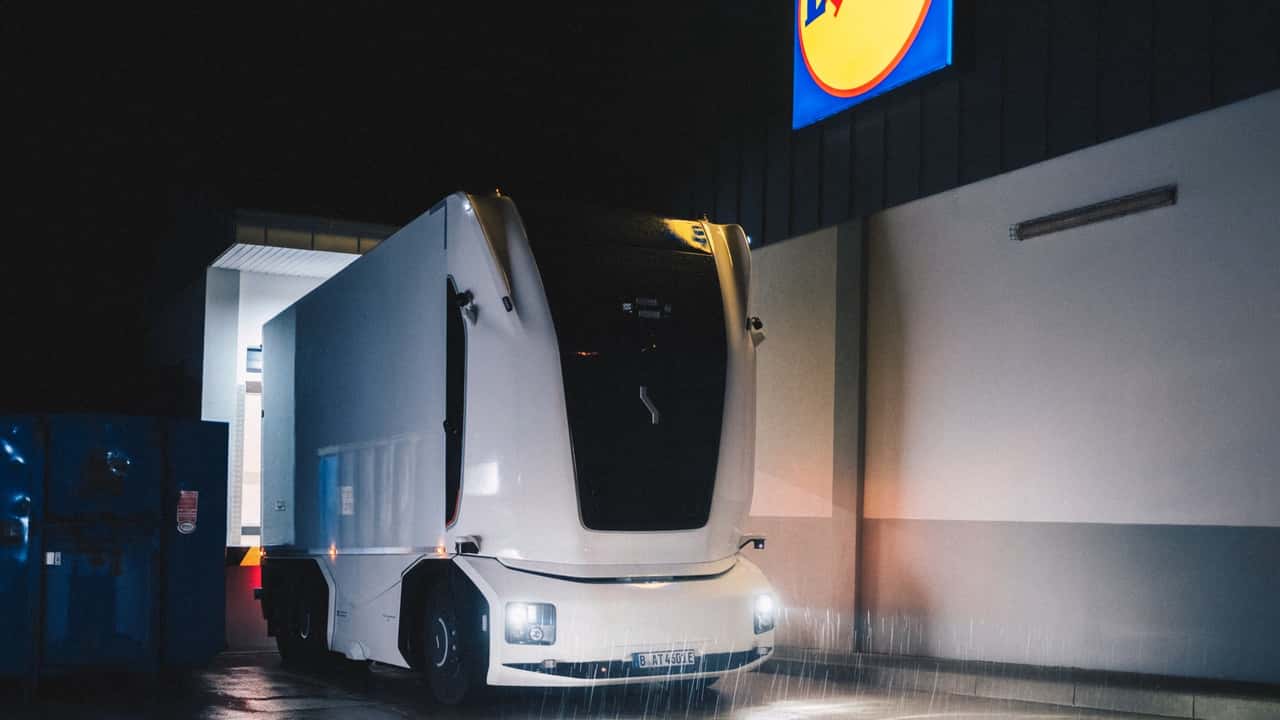
Lidl has begun utilizing autonomous trucks without a cab to transport goods on public roads in Germany, a development enabled by Einride's "Saga" platform and a new permit.
Einride, a Swedish transport company specializing in autonomous electric vehicles, received a first-of-its-kind permit from German authorities to operate its Level 4-capable "Einride Pod" on public roads. This permit allows the cabless truck to navigate public infrastructure, marking a significant advancement in autonomous logistics. The "Einride Pod" is an all-electric, autonomous freight vehicle designed for freight transport. Its design eliminates the traditional driver's cab, allowing for a more optimized cargo space and a fully autonomous operation. The vehicle is equipped with advanced sensors, cameras, and AI to perceive its surroundings and navigate safely.
Lidl, a prominent German international supermarket chain, is piloting this technology for its logistics operations. The initial deployment involves the autonomous trucks transporting goods between Lidl's distribution center and its stores. This pilot program aims to assess the efficiency, safety, and scalability of using cabless autonomous trucks in a real-world retail supply chain. The "Saga" platform from Einride is the operational system that monitors and manages the autonomous fleet, providing remote oversight and control capabilities. This system is crucial for ensuring the safe operation of the vehicles and for responding to any potential issues that may arise during transit.
The introduction of these autonomous trucks represents a potential shift in the logistics industry, promising increased efficiency, reduced operational costs, and potentially improved safety by removing human error from driving. The Level 4 autonomy means the vehicle can handle all driving tasks under specific conditions without human intervention, though a remote operator may still be involved for oversight or in complex situations. The German permit is a critical step, as it signifies regulatory acceptance and paves the way for broader adoption of such technologies on public roadways. Einride has been a pioneer in this field, with previous deployments in controlled environments and on private land. This move onto public roads in Germany is a major milestone, demonstrating the maturity of their technology and their commitment to commercializing autonomous freight.
Lidl's involvement highlights the growing interest from major retailers in leveraging advanced automation to streamline their supply chains. The company is likely evaluating the economic and operational benefits, such as 24/7 operation capabilities, optimized routing, and potential reductions in labor costs associated with long-haul trucking. The success of this pilot could influence future investments and operational strategies for Lidl and other retailers looking to embrace the next generation of logistics solutions. The long-term implications include a potential transformation of freight transportation, with a greater reliance on autonomous electric vehicles for both short and long-distance deliveries.
Original source — read the full reporting at the publisher:
Read on InsideEVsGet the weekly AI digest
AI news + new model releases, weekly. Drafted by our agents, reviewed by humans.