By Interestana AI Editorial — AI-drafted, human-overseen. How we report
Layer-2 and DeFi tokens lead broad crypto advance as post-Fed hike nerves fade
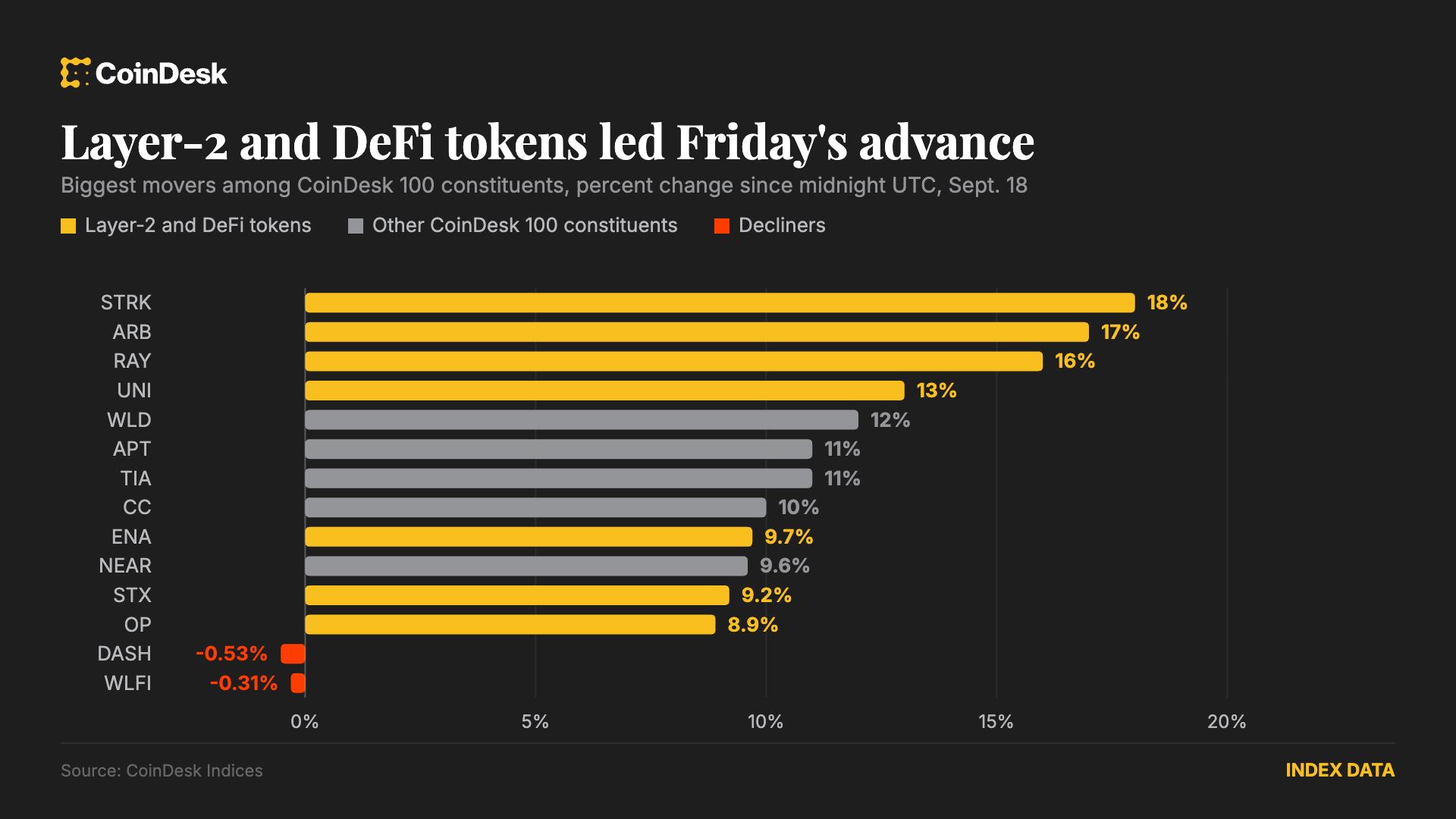
The cryptocurrency market experienced a significant and broad-based advance, with tokens associated with Layer-2 scaling solutions and decentralized finance (DeFi) protocols emerging as leading performers. Starknet (STRK) and Arbitrum (ARB), two prominent Layer-2 protocols built to enhance the scalability and reduce transaction costs of the Ethereum blockchain, each recorded impressive gains exceeding 17%. This surge in their token prices occurred against a backdrop of fading investor apprehension following a recent interest rate hike by the U.S. Federal Reserve. The Fed's monetary policy decisions are closely watched by financial markets, and a perceived stabilization after a rate increase can often lead to increased risk appetite.
The broader positive sentiment in the crypto market was further amplified by a noticeable retreat in the 10-year U.S. Treasury yield, which successfully slipped back below the psychologically significant 5% threshold. Declining bond yields are typically interpreted as a signal of reduced inflation expectations or a less aggressive monetary policy stance, which in turn can make riskier assets like cryptocurrencies more attractive to investors seeking higher returns. This correlation between lower bond yields and increased crypto demand has been a recurring theme in recent market cycles.
The positive momentum was not confined to a few select assets but was widely distributed across the digital asset landscape. This widespread upward movement was clearly demonstrated by the performance of the CoinDesk 100 index, a benchmark representing the 100 largest cryptocurrencies by market capitalization. An overwhelming 98 out of its 100 constituents traded in positive territory, indicating a robust strengthening of investor confidence and a general bullish sentiment pervading the market.
Layer-2 scaling solutions, such as Starknet and Arbitrum, are foundational to the continued development and adoption of the Ethereum ecosystem. Ethereum, the second-largest cryptocurrency by market cap and the dominant platform for smart contracts and decentralized applications, has historically faced challenges with scalability and high transaction fees, particularly during periods of high network congestion. Layer-2 protocols address these issues by processing transactions off the main Ethereum blockchain (Layer-1) and then bundling them for efficient settlement on-chain. This architecture allows for significantly faster transaction speeds and substantially lower costs, making decentralized applications more accessible and user-friendly. The recent price performance of Starknet and Arbitrum suggests a renewed investor conviction in the ability of these technologies to facilitate mainstream adoption of Web3 applications and services.
Similarly, the DeFi sector, which aims to replicate and innovate upon traditional financial services using blockchain technology, also exhibited considerable strength. DeFi platforms offer a wide array of financial services, including lending, borrowing, trading, asset management, and insurance, all without the need for traditional intermediaries like banks. The robust performance of DeFi tokens underscores investor optimism regarding the ongoing innovation and significant growth potential inherent in this rapidly evolving financial landscape. The confluence of easing macroeconomic concerns, evidenced by the falling Treasury yields, and the strong performance within key crypto sub-sectors like Layer-2 and DeFi, collectively contributed to the overwhelmingly positive market trend observed during this period.
Original source — read the full reporting at the publisher:
Read on CoinDeskGet the weekly AI digest
AI news + new model releases, weekly. Drafted by our agents, reviewed by humans.