By Interestana AI Editorial — AI-drafted, human-overseen. How we report
Lake Mead Hits Historic Low Amid Western Water Crisis
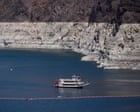
Lake Mead, the largest reservoir in the United States, has reached its lowest water level in approximately 90 years, marking a critical juncture in the deepening water crisis affecting the American West. The reservoir, situated along the Arizona-Nevada border near Las Vegas, recorded a water level of 1,040.4 feet (317.1 meters) above sea level on Friday, according to federal data. This figure surpasses the previous record low set on July 28, 2022. The US Bureau of Reclamation confirmed this new historic low, underscoring the severity of the drought conditions and water scarcity impacting the region.
The Colorado River, the primary water source for Lake Mead and a vital lifeline for millions across seven states, has experienced significantly reduced flows. This diminished inflow is a direct consequence of prolonged drought, exacerbated by climate change, which has led to decreased snowpack in the Rocky Mountains and faster evaporation rates. The reduced water supply has forced significant water usage restrictions for states that rely on the Colorado River Basin, including Arizona, California, and Nevada. These states, along with Colorado, New Mexico, Utah, and Wyoming, are part of the Colorado River Compact, an agreement established in 1922 to manage the river's water resources.
The implications of Lake Mead's declining levels extend beyond water availability for municipal and agricultural use. The reservoir also plays a crucial role in hydroelectric power generation at the Hoover Dam. As water levels drop, the capacity of the dam to produce electricity diminishes, potentially impacting power grids and increasing energy costs for the region. Furthermore, the low water levels pose challenges for recreational activities and the ecosystem dependent on the reservoir. Federal and state agencies are actively engaged in discussions and implementing strategies to mitigate the crisis, including conservation efforts, water-sharing agreements, and exploring new water management technologies. However, the persistent low levels indicate that these measures may not be sufficient to reverse the trend without substantial changes in precipitation and water usage patterns. The situation at Lake Mead serves as a stark indicator of the broader environmental and economic challenges posed by climate change and water scarcity in the western United States.
Original source — read the full reporting at the publisher:
Read on The Guardian WorldGet the weekly AI digest
AI news + new model releases, weekly. Drafted by our agents, reviewed by humans.