By Interestana AI Editorial — AI-drafted, human-overseen. How we report
Kevin Warsh's Fed Communication Shift Sparks Wall Street Concern
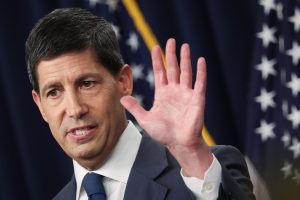
Former Federal Reserve Governor Kevin Warsh has articulated a stance advocating for a reduction in the central bank's forward guidance, a practice involving the public disclosure of expectations regarding future monetary policy. Warsh, who served on the Board of Governors from 2006 to 2011, believes that the Fed has become overly reliant on communicating its policy intentions, which he contends has constrained its decision-making capabilities. During a press conference following a recent Federal Open Market Committee (FOMC) meeting, Warsh elaborated on his perspective, suggesting that by diminishing forward guidance, market participants can adjust asset prices in response to economic data with greater autonomy regarding both direction and magnitude. He posited that this approach could ultimately benefit the Fed by allowing it to observe market reactions to developments in a more direct and unfiltered manner, suggesting the central bank need not always be the focal point of attention. The market's reaction to Warsh's statements was immediate and significant. Long-dated bond yields increased and have remained elevated, while yields on 2-year Treasuries declined. This market movement was interpreted as an indication that investors anticipate a reduced likelihood of the Fed further tightening financial conditions. However, Alex Wolf, a strategist at JPMorgan, suggested to Fortune that this response was less about the specifics of Warsh's remarks and more a manifestation of heightened uncertainty. This perceived increase in market volatility in the absence of clear communication is precisely what concerns Jan Hatzius, chief U.S. economist at Goldman Sachs. In a recent note, Hatzius highlighted the potential for markets to overreact or underreact to economic data points, which could distort the very market signals the Fed aims to monitor. Hatzius explained that participants in short-term interest rate markets, where the Fed's influence is most pronounced, tend to price in their expectations of the Fed's future actions rather than what they believe the Fed should do. He further argued that this dynamic will persist even if the FOMC provides less insight into its internal deliberations. The shift in communication strategy, as advocated by Warsh, could therefore lead to a more opaque environment for investors, potentially exacerbating price swings and making it more challenging for the Fed to gauge market sentiment accurately. The core of the debate revolves around the trade-off between providing market clarity through forward guidance and allowing markets greater freedom to interpret economic data independently, a balance that Warsh believes has tipped too far towards the former.
Original source — read the full reporting at the publisher:
Read on FortuneGet the weekly AI digest
AI news + new model releases, weekly. Drafted by our agents, reviewed by humans.