By Interestana AI Editorial — AI-drafted, human-overseen. How we report
Jay Clayton Sworn In as US Director of National Intelligence Amidst Controversy
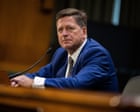
Jay Clayton was officially sworn in as the United States' ninth Director of National Intelligence (DNI) on Tuesday, August 4, 2026. The ceremonial oath of office was administered in the Oval Office by Treasury Secretary Scott Bessent, with the President in attendance, signifying the formal transfer of leadership over the nation's intelligence apparatus. Clayton's ascension to this pivotal role follows a notably contentious Senate confirmation hearing, during which he faced significant scrutiny. A key point of contention was his refusal to directly acknowledge that Donald Trump lost the 2020 presidential election. This stance drew sharp criticism from some members of the Senate, raising concerns about his commitment to democratic principles and the integrity of electoral processes, which are often subjects of intelligence analysis.
Clayton replaces Tulsi Gabbard, who had been serving as the acting director and stepped down from the position in June 2026. The Director of National Intelligence is a critical position established in the wake of the September 11, 2001, terrorist attacks by the Intelligence Reform and Terrorism Prevention Act of 2004. The DNI's primary responsibility is to lead and integrate the efforts of the 18 distinct U.S. intelligence agencies, ensuring a cohesive and effective intelligence community that supports national security objectives. The DNI also serves as the principal advisor to the President, the National Security Council, and the Homeland Security Council on all intelligence matters.
The confirmation process for Clayton involved extensive questioning from senators regarding his qualifications, his proposed approach to intelligence oversight, and his understanding of the intelligence community's role in a democratic society. His reluctance to definitively state the outcome of the 2020 election became a focal point of debate, highlighting potential ideological divides within the legislative body concerning the interpretation of electoral events. The transition of leadership at the Office of the Director of National Intelligence (ODNI) occurs during a period of heightened global geopolitical complexity, demanding precise and unified intelligence analysis. Clayton's tenure will be closely observed as he navigates the intricate landscape of national security, intelligence collection, analysis, and dissemination, with the expectation that he will uphold the integrity and impartiality of the intelligence community.
Original source — read the full reporting at the publisher:
Read on The Guardian WorldGet the weekly AI digest
AI news + new model releases, weekly. Drafted by our agents, reviewed by humans.