By Interestana AI Editorial — AI-drafted, human-overseen. How we report
Japan earthquake injures 50 and traps ‘many people’ inside shopping mall
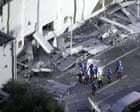
A significant seismic event, registering a magnitude of 6.8, has struck the Kumamoto prefecture, located on Japan's southern island of Kyushu. The earthquake occurred late on Tuesday afternoon, resulting in at least 50 reported injuries. Critically, an unknown number of individuals are believed to be trapped inside a shopping mall that has partially collapsed due to the tremor's force. Authorities have expressed grave concerns that fatalities are expected, given the severity of the structural damage at the mall.
The powerful quake caused widespread disruption across the region. Thousands of homes were plunged into darkness as power supplies were cut off. Essential infrastructure, including roads and bridges, sustained damage, hindering immediate rescue and assessment efforts. The epicenter of the earthquake was pinpointed within the Kumamoto region, an area that has a history of seismic activity, underscoring its vulnerability to such natural disasters. A magnitude of 6.8 signifies a substantial release of seismic energy, capable of inflicting considerable damage to buildings and infrastructure, particularly those not built to withstand such forces.
In the immediate aftermath, emergency services were rapidly mobilized to address the unfolding crisis. Rescue operations have been heavily concentrated on the partially collapsed shopping mall, where the trapped individuals are located. The full extent of the damage to other buildings and the broader infrastructure network across the Kumamoto prefecture is still being evaluated. However, initial reports clearly indicate significant disruptions to vital services and transportation routes.
This incident serves as a stark reminder of the persistent seismic risks inherent to Japan. The nation is situated on the Pacific Ring of Fire, a geologically active zone characterized by a high frequency of earthquakes and volcanic eruptions. While Japan has made considerable investments in developing earthquake-resistant building codes and sophisticated early warning systems, the sheer force of a 6.8-magnitude earthquake can still overwhelm even robust structures, especially older buildings or those that do not adhere to the most stringent modern construction standards. The events in Kumamoto are likely to prompt a thorough review of disaster preparedness and response protocols within the region and potentially across the nation.
The immediate priority for Japanese officials and emergency responders is the safe extraction of all individuals trapped within the collapsed shopping mall, alongside the provision of urgent medical care to those who have been injured. Looking ahead, the long-term impact on the Kumamoto prefecture will undoubtedly involve extensive recovery and rebuilding initiatives. This will be coupled with ongoing geological monitoring to assess the potential for aftershocks and further seismic activity. The incident in Kumamoto underscores the destructive potential of natural disasters and the critical importance of sustained vigilance and preparedness.
Original source — read the full reporting at the publisher:
Read on The Guardian WorldGet the weekly AI digest
AI news + new model releases, weekly. Drafted by our agents, reviewed by humans.