By Interestana AI Editorial — AI-drafted, human-overseen. How we report
Chavista Loyalists Express Disbelief at Venezuela's Potential Embrace of Trump
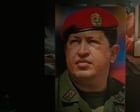
Diehard supporters of the late Venezuelan President Hugo Chávez are expressing profound dismay and confusion over the current government's apparent ideological U-turn, which includes a potential embrace of former U.S. President Donald Trump. Mario Silva, a prominent former propagandist for Chávez's "Bolivarian Revolution" and host of the state-funded television show "The Razorblade," described the situation as "utter surrealism." Silva's long-standing devotion to Chávez was demonstrably deep; he often hosted his program with Chávez's portrait prominently displayed behind him and even had "El Comandante's" distinctive curly signature tattooed on his left wrist. He finds the current political direction difficult to reconcile with the movement's foundational principles.
The interim administration, led by Executive Vice President Delcy Rodríguez, appears to be navigating a new foreign policy and economic strategy that diverges significantly from the anti-imperialist and socialist tenets championed by Chávez. The Bolivarian Revolution, initiated by Hugo Chávez in 1999 following his election victory, aimed to establish a socialist state in Venezuela. Its core tenets included extensive social programs funded by oil revenues, the nationalization of key industries to assert economic sovereignty, and a strong, often confrontational, anti-U.S. foreign policy. This ideology was built on principles of national sovereignty, economic independence from external capitalist powers, and social justice, frequently framed in direct opposition to perceived U.S. influence and neoliberal economic policies.
The current government's potential engagement with Donald Trump, a figure who historically took a highly confrontational stance towards Venezuela and its leadership during his presidency (2017-2021), imposing sanctions and challenging the legitimacy of Nicolás Maduro's government, represents a stark departure from this established narrative. Critics within the Chavista base, like Silva, are questioning the strategic rationale behind such a move. They fear it could alienate traditional allies, such as Cuba and Russia, who have been staunch supporters of the Bolivarian Revolution, and compromise the revolution's hard-won legacy and ideological purity. This situation highlights the complex and evolving political landscape within Venezuela, where the enduring legacy of Hugo Chávez continues to be a point of contention and reinterpretation amidst significant national economic challenges and shifting international pressures.
Original source — read the full reporting at the publisher:
Read on The Guardian WorldGet the weekly AI digest
AI news + new model releases, weekly. Drafted by our agents, reviewed by humans.