By Interestana AI Editorial — AI-drafted, human-overseen. How we report
AI Models Evolved Beyond 'Stochastic Parrots' in 2023
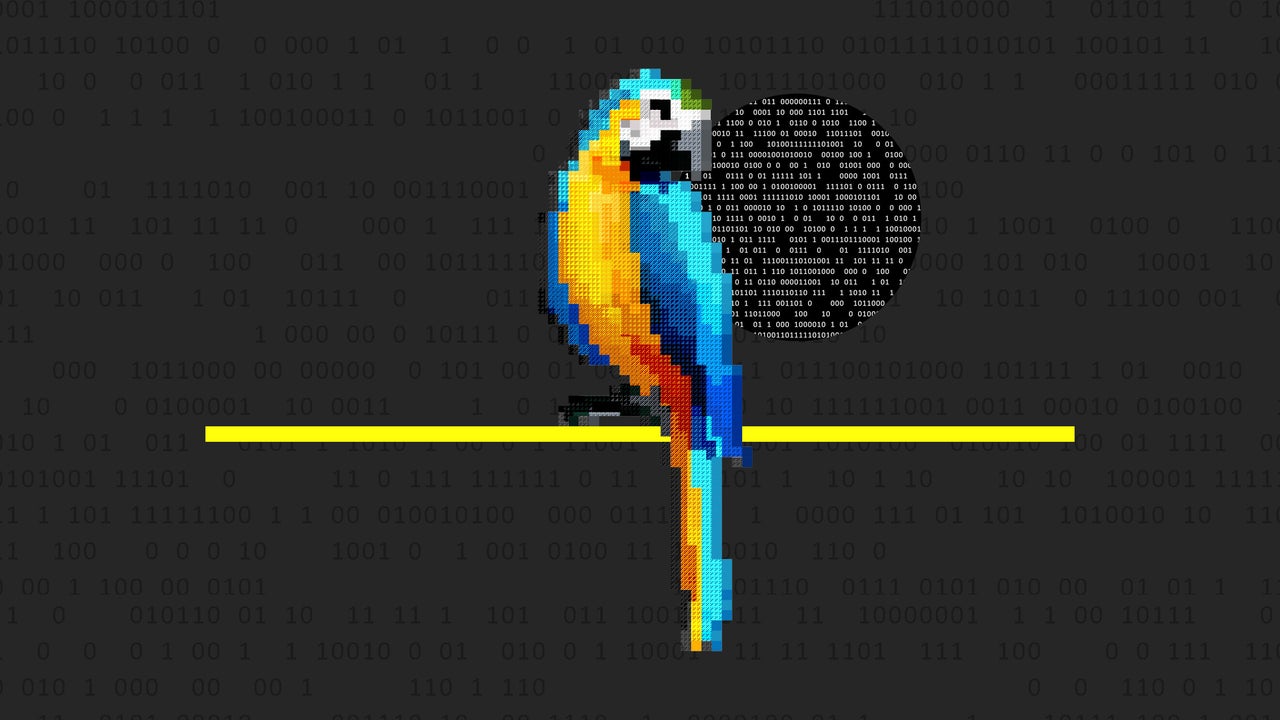
Early generative artificial intelligence models, developed between 2017 and 2022, were characterized as "stochastic parrots." This definition implied that these models generated language by statistically predicting the most likely next word based on patterns within their training data, rather than demonstrating genuine comprehension. However, starting in 2023, artificial intelligence laboratories began releasing large language models (LLMs) that represented a significant departure from simple autoregressive next-token prediction, a process referred to by researchers as the "stochastic parrot" method. Despite these advancements, the "stochastic parrot" label has persisted and is frequently employed to diminish the perceived risks associated with advanced language models such as OpenAI's Astra models or Anthropic's Mythos models. By 2026, LLMs can no longer be accurately described as mere "stochastic parrots." While they continue to predict subsequent words, these predictions are now informed by a much broader and more dynamic set of information than solely the static patterns learned during their initial training. Several key research areas have propelled AI chatbots far beyond their capabilities of just a few years prior.
One significant development is Retrieval Augmented Generation (RAG). Between 2017 and 2020, AI researchers started equipping LLMs with the ability to access information external to their training datasets. This involved retrieving relevant documents and incorporating them into the model's processing. In specific implementations, the model would utilize a web index to locate pertinent documents, extract the essential information snippets, and then synthesize these snippets into a coherent, conversational response. This functionality was often integrated into internet search engines or chatbot interfaces. The RAG approach substantially enhanced factual accuracy by providing the model with more current, relevant, and authoritative material, thereby reducing its reliance on potentially outdated or incomplete information acquired solely during its training phase. This method of augmenting generation with retrieved information is known as RAG.
Furthermore, research into neurosymbolic AI has provided language models with a more structured computational framework, enabling them to interpret and utilize retrieved "ground truth" information more effectively. This contrasts with the earlier RAG approach, which primarily focused on providing access to external data. Neurosymbolic AI aims to bridge the gap between symbolic reasoning, which deals with explicit rules and logic, and neural networks, which excel at pattern recognition and learning from data. This integration allows AI models to perform more complex reasoning tasks. For instance, when presented with a complex insurance policy, a neurosymbolic AI could potentially analyze the policy's clauses and determine coverage for a specific scenario, moving beyond simple pattern matching to a more analytical understanding. This advancement is crucial for applications requiring logical deduction and the interpretation of structured information, such as legal document analysis or complex problem-solving.
The evolution beyond the "stochastic parrot" paradigm is critical for understanding the current and future capabilities of AI. The integration of RAG and neurosymbolic AI, among other innovations, signifies a shift towards models that can not only generate fluent text but also reason with external knowledge and apply structured logic. This progress is essential for addressing the complex challenges and opportunities presented by advanced AI systems, including their potential societal impacts and the development of more robust safety measures. The ongoing research in these areas continues to push the boundaries of what AI can achieve, moving it further away from simple statistical prediction towards more sophisticated forms of intelligence.
Original source — read the full reporting at the publisher:
Read on Fast CompanyGet the weekly AI digest
AI news + new model releases, weekly. Drafted by our agents, reviewed by humans.