By Interestana AI Editorial — AI-drafted, human-overseen. How we report
Italy's Cheese Banks Face Climate Change Threat
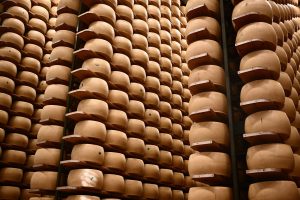
Italy's "cheese banks," which hold wheels of Parmigiano Reggiano as collateral for loans to dairy farmers, are facing significant threats from extreme heat and climate change. Credito Emiliano (Credem), a bank operating in the Emilia-Romagna region, has been accepting young wheels of Parmigiano Reggiano as collateral for loans since 1953. This practice allows small family farms, which require at least 12 to 36 months for their cheese to age, to access capital upfront. Producers typically receive 60% to 80% of a wheel's value immediately after it is accepted as collateral. Credem's subsidiary, Magazzini Generali delle Tagliate, manages the aging process for these wheels in warehouses located in Reggio Emilia and Modena. The scale of this operation is substantial; the cheese banks hold approximately 500,000 wheels, representing a significant portion of Italy's annual production of about 4 million wheels of Parmigiano Reggiano. Giancarlo Ravanetti, who oversees the bank's cheese warehouse business, stated that his facilities handle around 2.3 million wheels annually. The Parmigiano Reggiano industry is a major economic driver, valued at 4 billion euros (approximately $4.7 billion USD), and is supported by roughly 300 certified dairies. The critical aging process for Parmigiano Reggiano requires precise temperature control, and maintaining these conditions has become increasingly expensive due to rising energy costs. This year's record heat waves in Europe have led to a roughly 30% increase in daily energy consumption for cooling systems, compelling the bank to invest in upgrades for its cooling infrastructure and boilers. Beyond the cheese banks, economists specializing in the impact of heat on agricultural yields warn that the effects of climate change extend to other vital Italian sectors, including vineyards and olive groves, posing broader economic risks. The innovative use of blockchain technology has further expanded Credem's lending capacity by allowing farmers to pledge cheese wheels stored at their own facilities, effectively doubling the bank's lending potential. This technological integration streamlines the collateral process, ensuring continued financial support for dairy producers while mitigating risks associated with large inventories tied up in aging products. The economic stability of this significant agricultural sector is thus increasingly intertwined with the ability to manage and adapt to a changing climate, highlighting the vulnerability of traditional financial models reliant on agricultural commodities.
Original source — read the full reporting at the publisher:
Read on FortuneGet the weekly AI digest
AI news + new model releases, weekly. Drafted by our agents, reviewed by humans.