By Interestana AI Editorial — AI-drafted, human-overseen. How we report
Russia's Rassvet Satellite Program Faces Orbital Challenges
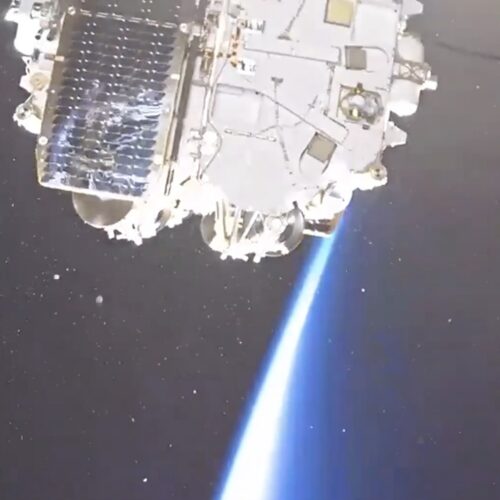
Russia's ambitious Rassvet satellite program, designed to rival SpaceX's Starlink, is encountering significant orbital deployment issues. Bureau 1440, the organization responsible for Rassvet, has launched 32 satellites into low-Earth orbit through two separate missions earlier this year, one in March and another in July. These launches represent approximately 10 percent of the 300 Rassvet spacecraft Russia intends to deploy by the end of next year, with a long-term goal of 924 satellites by 2035. The program aims to provide internet connectivity for both military and civilian users across Russia.
However, a critical challenge has emerged: none of the 32 launched satellites have successfully reached their designated operational orbit of 500 miles (800 kilometers) above Earth. Instead, the rockets that carried the initial batches of Rassvet satellites placed them in orbits considerably closer to the planet. The plan was for these satellites to utilize their onboard plasma engines to gradually ascend to their intended operational altitude over the subsequent months. The failure to achieve these target orbits raises questions about the efficacy of the launch vehicles, the satellite propulsion systems, or the overall deployment strategy.
The Rassvet program's slow progress and current orbital difficulties contrast with the rapid expansion of Starlink, which has already deployed thousands of satellites and provides widespread internet service. Russia's stated objective for Rassvet is to establish a robust satellite internet constellation capable of serving its vast territory, particularly in regions where terrestrial infrastructure is limited. The program's success is crucial for Russia's digital sovereignty and its ability to maintain communication networks, especially in the context of ongoing geopolitical tensions.
Bureau 1440's objective of reaching 924 satellites by 2035 indicates a long-term commitment to developing a comprehensive satellite internet service. The current setbacks, however, cast doubt on the feasibility of meeting these ambitious timelines and deployment targets. The company's ability to rectify the orbital insertion problems and ensure the successful operation of its satellites will be a key determinant of Rassvet's future viability as a competitor in the burgeoning global satellite internet market. Further launches and the performance of the existing satellites will be closely monitored to assess the program's trajectory.
Original source — read the full reporting at the publisher:
Read on Ars TechnicaGet the weekly AI digest
AI news + new model releases, weekly. Drafted by our agents, reviewed by humans.