By Interestana AI Editorial — AI-drafted, human-overseen. How we report
Gordon Brown Predicts United Ireland
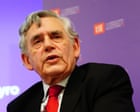
Former Prime Minister Gordon Brown has stated that a united Ireland is an inevitable outcome in the long term, according to an interview with The Guardian. Brown specified that any unification process would necessarily be a "long process" and contingent upon mutual agreement between all parties involved. His remarks carry particular weight given his past involvement in government efforts aimed at fostering peace in Northern Ireland. Brown's perspective on Irish unification contrasts with his strong opposition to Scottish independence, a stance he has consistently maintained. The former Prime Minister's comments come at a time of ongoing discussions and evolving political landscapes concerning the future of the United Kingdom and its constituent parts. His involvement in the Good Friday Agreement era, a pivotal peace accord signed in 1998 that aimed to resolve the conflict in Northern Ireland, provides a significant backdrop to his current pronouncements on Irish unity. The Good Friday Agreement established a power-sharing executive in Northern Ireland and a cross-border North-South Ministerial Council, fundamentally altering the political framework of the region and its relationship with the Republic of Ireland. Brown's long-standing engagement with the complexities of Northern Ireland's political status lends his views on its future a degree of authority within political discourse. The concept of a united Ireland has been a recurring theme in Irish and British politics for decades, with varying levels of support and opposition across different communities and political factions. Recent demographic shifts and evolving political sentiments in Northern Ireland have led to renewed debate about the potential for a border poll and the future constitutional status of the region. Brown's assertion that unification is inevitable, albeit a gradual and consensual process, adds a prominent voice to this ongoing conversation. His emphasis on mutual agreement underscores the need for broad consensus and careful negotiation to navigate such a significant constitutional change. The former Prime Minister's nuanced position, advocating for Irish unity while opposing Scottish independence, highlights his specific approach to national self-determination and the integrity of existing state structures. This distinction suggests a focus on historical and unique circumstances pertaining to Ireland, rather than a blanket endorsement of secessionist movements. The interview did not provide specific timelines or detailed proposals for how such a unification might occur, but rather framed it as a predictable future development requiring careful management. The implications of a united Ireland would be far-reaching, impacting political, economic, and social structures across the island and within the broader context of the United Kingdom and the European Union. Brown's intervention into this sensitive subject matter is likely to stimulate further debate and analysis among politicians, academics, and the public.
Original source — read the full reporting at the publisher:
Read on The Guardian WorldGet the weekly AI digest
AI news + new model releases, weekly. Drafted by our agents, reviewed by humans.