By Interestana AI Editorial — AI-drafted, human-overseen. How we report
Iran's Economy Blocked by Red Tape on Land Trade Routes
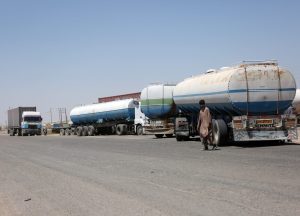
Iran's economy is experiencing significant disruption, not only due to U.S. naval blockades that have closed off its southern ports, which previously handled over 80% of its trade tonnage, but also because efforts to reroute shipments via land are being severely hampered by internal bureaucratic inefficiencies and inadequate infrastructure. U.S. Central Command reported redirecting 109 commercial vessels to enforce the blockade, leading to a surge of truck convoys along Iran's borders with Turkey, Pakistan, Afghanistan, Iraq, and Turkmenistan. While bilateral trade with neighboring countries has seen an increase, for instance, Iran's trade with Turkey rose 19% to $3.2 billion in the first half of the year, this growth is overshadowed by systemic delays. These delays are primarily caused by protracted customs checks and infrastructure not built to manage the increased volume, resulting in extensive traffic jams. At one crossing with Turkey, 3,700 trucks were stranded on the Iranian side, with drivers sometimes waiting over three weeks to cross. Such prolonged delays lead to spoilage of perishable goods and increased costs for other essential items, exacerbating inflation, which currently stands at 90%. A Turkish truck driver cited by the Financial Times reported wait times of up to 24 days for return trips, and an Iranian trucker experienced a 23-day wait at the Afghanistan border in mid-June. The Wall Street Journal noted that at the Turkmenistan border, a lack of warehouses and proper registration processes are limiting the transport of goods by rail. Despite increased trade with neighbors, Iran's overall trade has declined. In the five months ending August 22, non-oil exports fell 28% year-on-year to $15 billion, and imports dropped 26% to $17 billion, according to Iranian customs data. This collapse in trade has critically impacted fuel supplies, as Iran relies on imports due to insufficient domestic refining capacity, leading to gasoline shortages and price hikes to curb demand. The economic strain is compounded by the inability to effectively utilize land routes as a viable alternative to maritime trade, leaving the nation vulnerable to both external sanctions and internal logistical failures.
Original source — read the full reporting at the publisher:
Read on FortuneGet the weekly AI digest
AI news + new model releases, weekly. Drafted by our agents, reviewed by humans.