By Interestana AI Editorial — AI-drafted, human-overseen. How we report
Iran's Currency Plummets Amidst Oil Export Blockade
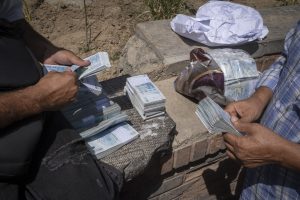
Iran's national currency, the rial, has experienced a dramatic decline, reaching new record lows as the regime faces a severe cash crunch exacerbated by a U.S. naval blockade that has effectively halted oil exports. According to Homayoun Falakshahi, head of crude oil analysis at Kpler, Iran did not load any oil at its export terminals last month, a situation not seen since the 1979 Islamic revolution. This blockade has pushed Iran's oil exports to virtually zero, while neighboring Persian Gulf countries have increased their own shipments under U.S. military protection, diminishing Tehran's influence over the Strait of Hormuz. The economic hardship extends beyond oil, as Iran is also unable to import essential goods, including fuel, by sea, with land-based routes facing significant congestion. The nation is grappling with inflation approaching 90%, a projected 5.4% GDP shrinkage this year, rising unemployment, and energy rationing. Supreme Leader Ayatollah Mojtaba Khamenei has voiced concerns about "social cohesion" due to these economic pressures. A previous currency collapse in late last year led to widespread protests, which the regime suppressed through a "brutal crackdown" early this year. The ongoing conflict initiated by the U.S. and Israel against Iran in February has further accelerated the rial's depreciation, raising fears of renewed unrest. On Tuesday, the currency hit a new record low in Tehran, trading at over 2.5 million rials to the U.S. dollar. This follows a previous record low of 2.2 million rials to the dollar on September 2. The rial's value has fallen precipitously in a short period, trading near 1.5 million rials to the dollar at the beginning of the current year and around 920,000 rials in August 2025, signifying a plunge of approximately 170% since then. Looking further back, the rial was valued at 35,000 to the dollar at the start of 2018. Currently, Tehran is managing to generate a minimal revenue stream from oil that was already in transit on tankers before the U.S. reimposed its blockade in mid-July. Kpler estimates that these pre-blockade supplies are dwindling. The economic crisis is multifaceted, impacting daily life through energy shortages and rising prices, and creating a volatile political climate. The government's ability to manage these economic challenges is severely tested by the international sanctions and the ongoing geopolitical tensions. The reliance on oil exports as a primary source of foreign currency has made Iran particularly vulnerable to such external pressures. The long-term economic outlook remains uncertain, contingent on the resolution of international disputes and the effectiveness of domestic economic policies.
Original source — read the full reporting at the publisher:
Read on FortuneGet the weekly AI digest
AI news + new model releases, weekly. Drafted by our agents, reviewed by humans.