By Interestana AI Editorial — AI-drafted, human-overseen. How we report
Iran President Calls US Bully, Signals Openness to Talks
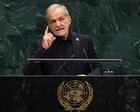
Iranian President Masoud Pezeshkian addressed the United Nations General Assembly in New York, delivering a speech that directly challenged former US President Donald Trump's rhetoric and characterized the United States as the primary "bully" and "terrorist" in the Middle East. Pezeshkian's remarks, made during his first address to the assembly since the commencement of an "all-out war" involving the US and Israel against Iran, underscored Iran's steadfast refusal to yield to American pressure. He repeatedly asserted that Tehran would "never bend the knee to America," framing the nation's stance as one of defiance against perceived foreign aggression and coercion.
Despite the strong condemnation of US foreign policy and actions, President Pezeshkian simultaneously signaled Iran's willingness to engage in diplomatic processes. He stated, "We are ready for dialogue and diplomacy and negotiations but without the language of force." This dual approach aimed to present Iran as both resolute in defending its sovereignty and open to peaceful resolution of international disputes. Pezeshkian emphasized Iran's historical commitment to the negotiating table, suggesting that the onus for stalled diplomatic efforts lay with other parties. The speech occurred amidst a heightened geopolitical climate, with Iran facing significant international scrutiny and sanctions, making its articulation of both defiance and a desire for dialogue a key diplomatic maneuver on the global stage.
The address to the UN General Assembly, a prominent international forum, provided President Pezeshkian with a platform to directly counter narratives that have often portrayed Iran in a negative light. By framing the US as the aggressor, he sought to reframe the regional conflict dynamics and garner international sympathy or at least understanding for Iran's position. The reference to an "all-out war" involving the US and Israel suggests a context of significant military and political tension, where Iran perceives itself to be under direct threat. Pezeshkian's rhetoric aimed to shift the perception of Iran from a state acting aggressively to one defending itself against a more powerful, coercive entity. The president's insistence on negotiating "without the language of force" implies a critique of what he views as coercive diplomacy or military threats employed by the US and its allies.
This diplomatic engagement at the UN represents a critical moment for Iran's international relations. The president's words are intended to resonate with a global audience, particularly nations that may be wary of American dominance or interventionism. By highlighting Iran's readiness for negotiation, Pezeshkian attempts to position Iran as a constructive actor seeking peace, while simultaneously holding the US accountable for what he describes as bullying and terrorism. The effectiveness of this strategy will likely be measured by subsequent diplomatic interactions and the international community's response to Iran's stated willingness to engage in dialogue under specific conditions. The speech is part of a broader effort by the Iranian leadership to navigate complex international pressures and assert its national interests on the world stage.
Original source — read the full reporting at the publisher:
Read on The Guardian WorldGet the weekly AI digest
AI news + new model releases, weekly. Drafted by our agents, reviewed by humans.