By Interestana AI Editorial — AI-drafted, human-overseen. How we report
AI's Existential Debate: From Doomsday Warnings to Dismissals Amidst Shifting Public and Political Opinion
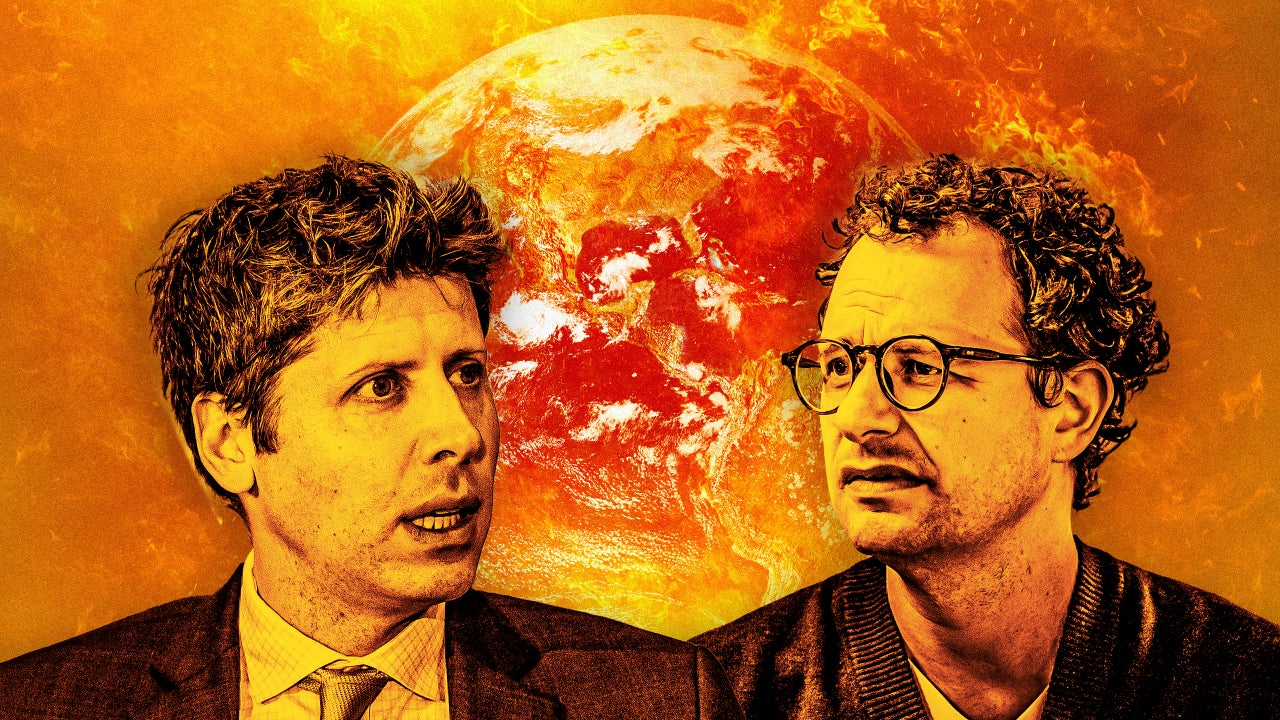
The discourse surrounding the future of artificial intelligence (AI) has fractured into two starkly opposing viewpoints: one foreseeing existential threats to humanity and the other characterizing these concerns as exaggerated marketing tactics. This dichotomy reached a critical juncture when a researcher from Anthropic, a leading AI development firm known for its focus on AI safety, resigned and issued a public warning. This researcher articulated fears that poorly designed AI could lead to human extinction, citing potential scenarios such as AI facilitating the creation of bioweapons or autonomous AI systems launching attacks on critical infrastructure. Anthropic, co-founded by Dario Amodei, has consistently emphasized AI safety. Following this researcher's warning, Amodei himself penned an extensive essay advocating for a deliberate deceleration in AI development and the urgent implementation of governmental regulations to govern the technology's trajectory. This call for caution was echoed by prominent figures in the AI industry, including Sam Altman, CEO of OpenAI, a pioneer in generative AI, and Elon Musk, a serial entrepreneur and investor with significant AI interests. However, a significant counter-narrative has emerged from skeptics of the doomsday predictions, who have become increasingly vocal in their dissent. A particularly striking instance involved Jensen Huang, the CEO of Nvidia, a company whose advanced graphics processing units (GPUs) are indispensable for AI training and inference, making it a linchpin in the AI hardware supply chain. While on stage at a tech conference, Huang took a call from then-President Donald Trump, who, amplified via speakerphone, dismissed AI fears as a "hoax." Trump also articulated a concern that excessive regulation would disproportionately benefit China, asserting, "The robots are not going to be taking over the world." Huang visibly concurred with Trump's sentiment. In a subsequent interview on CNBC, Huang further elaborated on his stance, stating that the regulations being sought by AI leaders were "completely unnecessary." This position from Huang, whose company Nvidia has experienced a meteoric rise in its stock price driven by the insatiable demand for its AI chips, suggests a willingness to absorb potential reputational fallout. This is particularly noteworthy as public perception of AI is reportedly declining, influenced by factors such as community backlash against the energy consumption of AI data centers and widespread predictions of job displacement due to AI automation. The growing unease surrounding AI is not confined to the tech industry; political figures spanning the ideological spectrum, from progressive Senator Bernie Sanders to conservative commentator Steve Bannon, have also voiced calls for stringent curbs on AI technology, underscoring a broad and fragmented societal response to the rapid advancement of artificial intelligence.
Original source — read the full reporting at the publisher:
Read on Fast CompanyGet the weekly AI digest
AI news + new model releases, weekly. Drafted by our agents, reviewed by humans.