By Interestana AI Editorial — AI-drafted, human-overseen. How we report
Olive Ridley Turtles Nesting in California for First Time
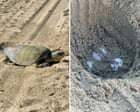
Olive ridley sea turtles, a species typically found in tropical waters, have been documented nesting on California beaches for the first time in recorded history. The unprecedented event occurred last weekend when a female turtle was observed emerging from the surf at sunset on Huntington Beach in Southern California and beginning to lay eggs in the sand. Observers on the beach expressed shock and excitement at the sighting. Justin Viezbicke, the California stranding coordinator for the National Oceanic and Atmospheric Association (NOAA), confirmed that the discovery has generated significant interest among scientists and wildlife officials. The exact reasons behind this northward shift in nesting behavior remain a subject of intense scientific investigation, with Viezbicke referring to it as the 'million dollar question.'
This occurrence marks a significant deviation from the typical migratory and nesting patterns of the olive ridley sea turtle (Lepidochelys olivacea). These turtles are known for their widespread distribution in the tropical and subtropical waters of the Pacific, Indian, and Atlantic Oceans. Their nesting grounds are conventionally located in warmer regions, far from the coast of California. The species is characterized by its relatively small size compared to other sea turtles and its unique synchronized mass nesting events, known as 'arribadas,' where thousands of females come ashore to lay eggs within a few days. The sighting of a lone female nesting in California raises questions about potential changes in ocean currents, water temperatures, or food availability that might be influencing the turtles' navigational cues and habitat selection.
NOAA, a U.S. government agency responsible for monitoring and protecting marine life, is actively involved in studying this phenomenon. The agency's stranding coordinator for California, Justin Viezbicke, is a key figure in documenting and analyzing such events. The discovery prompts a broader scientific discussion about the impacts of climate change on marine ecosystems and species distribution. Warmer ocean temperatures, potentially linked to global climate shifts, could be a primary driver for species typically found in warmer climates to expand their range into previously cooler territories. Researchers will likely be examining historical oceanographic data, satellite imagery of sea surface temperatures, and potential changes in prey distribution to understand the environmental factors contributing to this unusual nesting behavior. The long-term implications for the olive ridley population and the California coastal ecosystem are yet to be determined, but this event underscores the dynamic nature of marine environments and the need for continued monitoring and research.
The implications of this event extend beyond the immediate observation. Scientists will be keen to determine if this is an isolated incident or the beginning of a new trend. Further monitoring of California's coastline will be crucial to identify any subsequent nesting attempts or the presence of other olive ridley turtles. Understanding the environmental triggers for this behavior could provide valuable insights into how other marine species might adapt or respond to changing oceanic conditions. The conservation status of olive ridley turtles, which are listed as Near Threatened by the IUCN, also adds a layer of importance to this discovery, as understanding their habitat needs and migratory patterns is vital for their long-term survival. The scientific community anticipates further research and data collection to shed light on this remarkable expansion of the olive ridley sea turtle's known range.
Original source — read the full reporting at the publisher:
Read on The Guardian WorldGet the weekly AI digest
AI news + new model releases, weekly. Drafted by our agents, reviewed by humans.