Bayreuth Festival Marks 150 Years of Wagner's Influence
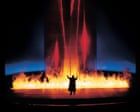
The Bayreuth Festival is celebrating its 150th anniversary this summer, marking 150 years since Richard Wagner's ambitious vision to reshape the world through music and art. The inaugural festival opened on August 13, 1876, with the first complete staging of his "Der Ring des Nibelungen" cycle at the specially constructed Bayreuth Festspielhaus in Bavaria. This event drew a distinguished audience, including royalty, political figures, and prominent artists like Tchaikovsky, Grieg, Bruckner, and Liszt. Wagner, a former revolutionary, intended the "Ring" cycle to herald a new era, offering a narrative of power, love, redemption, betrayal, and renewal.
The enduring influence of Richard Wagner on the arts is substantial and multifaceted. Beyond his innovations in stagecraft, such as concealing the orchestra in a pit and darkening the auditorium at Bayreuth, his impact resonated across various creative fields. "Wagnerism" became a significant cultural movement, influencing German philosophers, Parisian painters, and poets throughout the 19th century. Furthermore, Wagner's work had a profound effect on cultural politics, and unfortunately, his legacy was later tarnished by the antisemitic interpretations that emerged after his death in 1883. The article prompts reflection on what classical music might look like today without Wagner's monumental contributions.
Original source — read the full reporting at the publisher:
Read on The Guardian Culture