By Interestana AI Editorial — AI-drafted, human-overseen. How we report
Wildfire Smoke Poses Deadly Health Burden
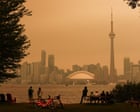
Wildfire smoke is emerging as a significant and potentially deadly health burden, prompting scientists to accelerate research into its complex links with mortality as "fire weather" becomes more prevalent. The pervasive nature of smoke particles, composed of soot and ash, can travel thousands of kilometers from their source, impacting air quality in distant urban centers. Erin O’Connor, who manages the emergency department at Toronto General Hospital, described the experience of witnessing the sky turn an "almost post-apocalyptic" orange in Canada's largest city, even a thousand kilometers from the boreal forest fires in northern Ontario. The smell of smoke was so potent that it felt like standing next to a campfire, and it permeated even indoor environments despite air filtration systems designed to protect hospital patients. O'Connor observed a notable increase in patients presenting with allergic reactions and shortness of breath during these periods of heavy smoke exposure. The phenomenon highlights the far-reaching consequences of wildfires, extending beyond immediate fire zones to affect public health in unexpected locations.
The health impacts of wildfire smoke are multifaceted and not yet fully understood, posing a challenge for medical professionals and public health officials. Unlike other forms of air pollution, wildfire smoke contains a unique cocktail of particulate matter, including fine particles (PM2.5) and ultrafine particles, along with various toxic gases such as carbon monoxide, nitrogen oxides, and volatile organic compounds. These components can penetrate deep into the lungs, causing inflammation and exacerbating pre-existing respiratory and cardiovascular conditions. Studies have begun to link exposure to wildfire smoke with increased hospital admissions for conditions like asthma, bronchitis, and heart attacks. Furthermore, emerging research suggests potential long-term effects, including impacts on cognitive function and mental health, though these areas require more extensive investigation. The sheer volume and intensity of smoke produced by increasingly frequent and severe wildfires, driven by climate change, mean that populations are being exposed to these harmful agents for longer durations and at higher concentrations than in previous decades.
Addressing the growing health crisis associated with wildfire smoke necessitates a multi-pronged approach involving scientific research, public health interventions, and policy changes. Scientists are working to develop more accurate models to predict smoke dispersion and its health impacts, enabling better public warnings and preparedness strategies. Public health agencies are advising individuals, particularly vulnerable populations such as children, the elderly, and those with chronic illnesses, to limit outdoor exposure during smoke events, stay indoors with air purifiers, and wear N95 masks if outdoor activity is unavoidable. The long-term implications of repeated smoke exposure on community health are a significant concern, potentially leading to increased healthcare costs and reduced quality of life. The escalating frequency and severity of wildfires, often attributed to climate change, underscore the urgent need for comprehensive strategies to mitigate climate change itself, alongside adaptation measures to manage the immediate and ongoing health consequences of wildfire smoke.
The economic and societal costs associated with wildfire smoke are also substantial. Beyond direct healthcare expenditures, there are indirect costs related to lost productivity due to illness, reduced tourism, and the need for extensive air quality monitoring and public health advisories. The visual impact of smoke-filled skies, as described by O'Connor, can also have psychological effects on communities, contributing to anxiety and a sense of environmental distress. As the planet continues to warm, the conditions conducive to large-scale wildfires are expected to intensify, making the health burden of smoke an increasingly critical issue for global public health. Continued investment in research, improved public communication, and robust policy frameworks are essential to navigate this evolving environmental and health challenge.
Original source — read the full reporting at the publisher:
Read on The Guardian WorldGet the weekly AI digest
AI news + new model releases, weekly. Drafted by our agents, reviewed by humans.