By Interestana AI Editorial — AI-drafted, human-overseen. How we report
Paid Social Drives Demand for Paid Search
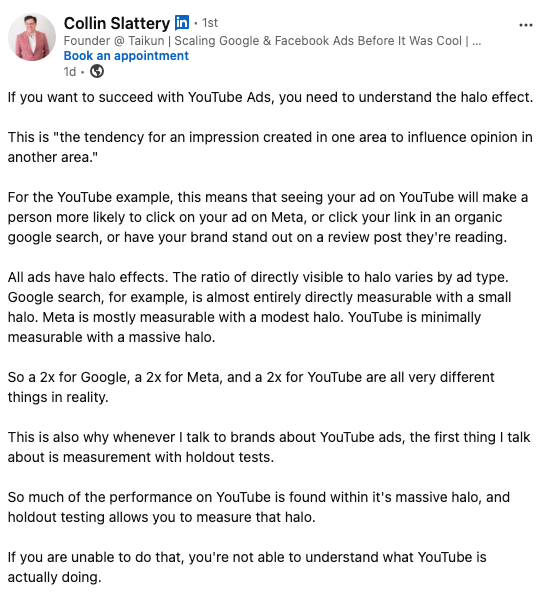
Paid social media campaigns play a crucial role in generating demand that ultimately benefits paid search efforts, a phenomenon often obscured by standard attribution models. When a customer's journey involves multiple channels, devices, and extends over several days, traditional attribution methods frequently credit the conversion solely to the final touchpoint, typically paid search, rendering the earlier influence of social media invisible. This can lead to a misperception that paid social is underperforming, potentially resulting in budget cuts.
To illustrate how measurement can create a misleading narrative of paid social's failure, consider a scenario where a manager is skeptical of paid social's effectiveness and seeks justification to reduce its budget. This can be achieved by employing measurement strategies that systematically diminish social media's contribution. For instance, relying exclusively on last-touch attribution assigns all conversion credit to the final click, effectively erasing the impact of earlier interactions that primed the customer. Similarly, confining the conversion window to a restrictive 24-hour period excludes the longer-term influence that paid social often exerts. Isolating paid social campaigns in separate reports, detached from paid search, email, or organic channels, further hinders the ability to discern how these channels collaborate. Each of these measurement choices strips away essential context, making paid social appear less impactful than it truly is.
The solution lies in shifting the focus from direct conversions attributed to paid social to measuring the broader demand it cultivates. Instead of attempting to track individual users through fragmented and often unreliable pixel data, a more effective approach is to analyze the aggregate demand generated by paid social campaigns. One primary method for demonstrating this demand creation is by monitoring spikes in branded search queries. When users are exposed to paid social content, they are more likely to subsequently search for the brand directly. A noticeable increase in these branded search terms following the deployment of paid social campaigns serves as a strong indicator that social media efforts are successfully driving awareness and interest, which then translates into direct search demand.
Further analysis can involve examining the correlation between paid social campaign activity and subsequent increases in paid search click-through rates and conversion volumes for branded keywords. Tools that allow for cross-channel analysis can reveal how users who interacted with paid social ads later engage with paid search ads. This comprehensive view helps marketers understand the full customer journey and accurately attribute value across different touchpoints. By adopting these more holistic measurement strategies, businesses can move beyond the limitations of simplistic attribution models and gain a clearer understanding of paid social's true contribution to overall marketing performance, particularly its role in fueling paid search success.
Original source — read the full reporting at the publisher:
Read on Search Engine LandGet the weekly AI digest
AI news + new model releases, weekly. Drafted by our agents, reviewed by humans.