By Interestana AI Editorial — AI-drafted, human-overseen. How we report
German Scientists Uncover Snail Mucus Engineering: Collagen and Calcium Key to Tunable Slime
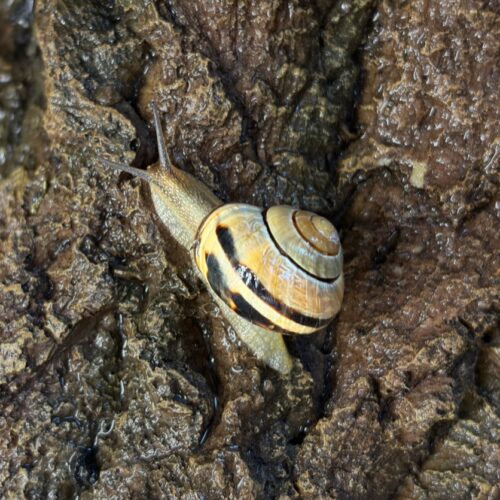
Snails are renowned for their remarkable mucus, a secretion highly valued in the cosmetic industry for its purported anti-inflammatory and anti-aging benefits. This versatile substance is not uniform; snails possess the ability to secrete different types of mucus, each precisely engineered with properties tailored to specific functional requirements. A recent study by a team of German scientists, published in the prestigious journal *Science*, has elucidated the underlying mechanism behind this "tunability." Their findings pinpoint collagen and calcium as the critical components that work in tandem to dictate the varying mechanical properties of snail slime.
Snail mucus, at its core, is predominantly water. However, its characteristic slimy and viscous texture is attributed to the presence of mucins, which are complex glycoproteins, and other complex carbohydrates. Beyond its established use in cosmetics, snail mucus holds significant potential for advanced applications, particularly in the field of drug delivery. Illustrating this potential, a 2020 study demonstrated that when snail slime, sourced from a common garden snail, was combined with gold nanoparticles, it significantly accelerated wound healing and exhibited notable anti-inflammatory properties in preclinical trials involving mice.
This latest research builds upon a growing body of scientific understanding regarding the functional diversity of snail mucus. A 2023 study specifically focused on garden snail slime, identifying three distinct types of secreted mucus. These included a hydrating mucus designed to protect the snail's skin, an adhesive mucus functioning as a glue to help the snail attach to surfaces, and a lubricating mucus that facilitates smoother locomotion.
The German research team concentrated their efforts on the grove snail, scientifically known as *Cepaea nemoralis*, also referred to as the lemon snail. This species was chosen as a subject due to its remarkable capacity to secrete five distinct types of mucus, each serving a unique purpose. Mirroring the findings in garden snails, the grove snail produces a lubricating mucus essential for its movement and an adhesive mucus that enables it to adhere securely to a variety of substrates.
Furthermore, the grove snail secretes a specialized mucus layer known as the epiphragm during periods of hibernation, typically in winter. This epiphragm is rich in calcite, a mineral form of calcium carbonate, and it effectively seals the snail's shell. This sealing action provides a vital protective barrier, shielding the snail from predators and safeguarding it against harsh environmental conditions during its dormant phase. The intricate engineering of these diverse mucus types, driven by the synergistic interplay of collagen and calcium, empowers snails to adapt their secretions for a wide spectrum of survival and functional needs, ranging from locomotion and adhesion to defense and hydration. The precise molecular mechanisms governing the remarkable tunability of snail slime are now better understood, paving the way for innovative applications in medicine, biomaterials, and beyond.
Original source — read the full reporting at the publisher:
Read on Ars TechnicaGet the weekly AI digest
AI news + new model releases, weekly. Drafted by our agents, reviewed by humans.