By Interestana AI Editorial — AI-drafted, human-overseen. How we report
Opencast Mining Risks Reawakening Dormant Geological Faults
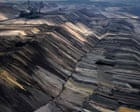
Opencast mining operations can lead to significant ground subsidence and the reawakening of dormant geological faults, extending their impact as far as 20 kilometers from the mine site. This phenomenon is primarily driven by the extensive groundwater extraction associated with these mining activities. While underground mines have long been recognized for their potential to cause ground subsidence, the risks posed by opencast mines have been less understood until recently. A new study, conducted by researchers from the GFZ Helmholtz Centre for Geosciences in Potsdam, Germany, has shed light on these lesser-known dangers.
The research team analyzed satellite data and conducted geological field measurements in the vicinity of the opencast Rhenish coalfields, an area situated between the cities of Aachen and Cologne in western Germany. This region is home to a large-scale opencast coalmine, which served as the focal point for the investigation. The findings indicate that the mining activities in this specific location not only caused widespread subsidence in the surrounding landscape but also reactivated pre-existing, inactive geological faults. The study highlights that the extensive dewatering required for opencast mining operations can alter subsurface stress conditions, creating pathways for fault movement.
Groundwater extraction is a critical component of opencast mining, as it is necessary to keep the mine pit dry and accessible for excavation. However, this process can lead to a significant drop in the local water table. As groundwater levels decrease, the pore pressure within the soil and rock layers diminishes, leading to increased effective stress. This increase in stress can cause the ground above to settle, a process known as subsidence. In areas with pre-existing geological faults, which are fractures or zones of fractures between two blocks of rock, the altered stress regime can be sufficient to overcome the friction holding the fault in place, leading to renewed movement or reactivation.
The implications of this research are substantial for mining regions worldwide. It suggests that the environmental and geological impact of opencast mines may be far more extensive than previously assumed. The reactivation of dormant faults can lead to seismic events, ground deformation, and potential damage to infrastructure located at considerable distances from the mining site. The study underscores the importance of comprehensive geological assessments and advanced hydrological modeling when planning and operating opencast mines, particularly in seismically active regions or areas with complex geological structures. Further research is needed to quantify the precise thresholds for fault reactivation and to develop effective mitigation strategies to minimize these risks.
Original source — read the full reporting at the publisher:
Read on The Guardian EnvironmentGet the weekly AI digest
AI news + new model releases, weekly. Drafted by our agents, reviewed by humans.