By Interestana AI Editorial — AI-drafted, human-overseen. How we report
Effective Altruism Faces Scrutiny from Trump Administration Officials
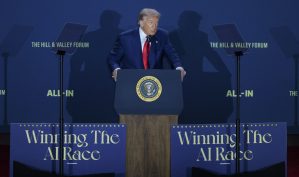
High-ranking officials within the Trump administration have recently voiced strong criticism against the philosophy of Effective Altruism (EA), particularly in the context of artificial intelligence policy. The Department of War tweeted in mid-September, stating "Americanism, not effective altruism," and asserting the United States' commitment to AI dominance. Defense Secretary Pete Hegseth specifically criticized EA for employing "sanctimonious rhetoric" to "strong arm the United States military into submission." Furthering this sentiment, Emil Michael, the Pentagon's Under Secretary of Defense for Research and Engineering, characterized EA's ideology as "dangerous" and "pretty dystopian." This public condemnation marks a significant shift for Effective Altruism, a movement that originated nearly two decades ago with two British academics.
Effective Altruism is fundamentally a philosophical movement centered on the principle that individuals should employ rational processes to achieve the greatest possible good for the largest number of people globally. While its core tenet appears straightforward, the practical application of these ideas becomes complex when confronted with real-world intricacies and differing perspectives on societal priorities. The movement's recent prominence in the AI discourse stems from the significant number of its adherents who have taken on roles within leading artificial intelligence companies, including OpenAI, Anthropic, and Google DeepMind. These individuals are often driven by a dual conviction: a profound belief in AI's potential to propel human progress and a serious concern about its capacity for catastrophic harm.
A key area of focus for many EA adherents is AI safety. They advocate for the development of robust methods to ensure that advanced AI systems remain aligned with human instructions and values. This emphasis on safety is rooted in the belief that without such safeguards, highly sophisticated AI could pose an existential threat to humanity. The close association of EA with anxieties surrounding advanced AI development has placed the movement under intense scrutiny from policymakers and national security figures. The administration's critique suggests a divergence in viewpoints regarding the potential risks and benefits of AI, and who should ultimately control its development and deployment. The officials' statements indicate a concern that EA's influence, particularly within the AI sector, might steer technological advancement in directions perceived as detrimental to national interests or security.
The philosophical underpinnings of Effective Altruism, which prioritize maximizing positive outcomes through data-driven analysis, are being contrasted with what these officials perceive as a more nationalistic or pragmatic approach to technological advancement. The criticism suggests a debate is emerging over the ethical frameworks guiding AI development and the potential influence of philosophical movements on national AI strategy. The administration's vocal opposition highlights a growing tension between proponents of global, utilitarian approaches to societal problems and those who prioritize national sovereignty and immediate security concerns in the rapidly evolving field of artificial intelligence.
Original source — read the full reporting at the publisher:
Read on FortuneGet the weekly AI digest
AI news + new model releases, weekly. Drafted by our agents, reviewed by humans.