By Interestana AI Editorial — AI-drafted, human-overseen. How we report
Aid Workers Killed by Israeli Airstrike Under 'Guilt by Association' Tactic
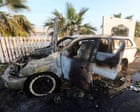
Seven international aid workers were killed in an Israeli airstrike in Gaza as a result of a widely used Israeli military tactic that establishes guilt by association, according to a Guardian investigation. The incident occurred in April 2024 when drones fired missiles at three clearly marked World Central Kitchen (WCK) vehicles shortly after they had completed escorting a food aid delivery to Gaza. The attack resulted in the deaths of three British humanitarian workers, along with an Australian national, a Palestinian national, a Polish national, and a dual US-Canadian national.
A top Israeli military prosecutor announced last month that criminal proceedings would not be pursued for the incident. The investigation by The Guardian, titled 'Death on the road to Rafah: the night the IDF targeted World Central Kitchen aid workers,' details how the targeting of the convoy was a consequence of this controversial military practice. This tactic reportedly allows for individuals to be deemed legitimate targets if they are associated with individuals or groups suspected of hostile activity, even without direct evidence of their own involvement. The clearly marked nature of the World Central Kitchen vehicles, which were identified with WCK logos, underscores the alleged application of this 'guilt by association' principle.
The World Central Kitchen is a non-profit organization founded by chef José Andrés, dedicated to providing food in response to humanitarian crises. The organization has been active in Gaza, delivering essential supplies amidst the ongoing conflict. The deaths of its workers have drawn widespread international condemnation and raised serious questions about the conduct of military operations in the region and adherence to international humanitarian law. The investigation highlights a pattern of targeting that may extend beyond direct combatants, potentially encompassing individuals and organizations involved in humanitarian efforts if they are deemed to be in proximity to or associated with perceived threats.
The Guardian's findings suggest that the Israeli military's targeting protocols may have led to the deaths of these aid workers, who were engaged in delivering crucial humanitarian assistance. The lack of criminal proceedings, as announced by the Israeli military prosecutor, further intensifies scrutiny on the accountability mechanisms within the Israeli defense forces. The report implies that the operational framework employed by the military may not adequately distinguish between combatants and non-combatants, particularly in complex urban environments where humanitarian organizations operate. The implications of this 'guilt by association' tactic could have a chilling effect on humanitarian operations in conflict zones, potentially deterring aid organizations from operating due to fear of reprisal or misidentification under such broad targeting criteria. The incident serves as a stark reminder of the dangers faced by humanitarian workers and the critical need for clear protocols and accountability in armed conflicts.
Original source — read the full reporting at the publisher:
Read on The Guardian WorldGet the weekly AI digest
AI news + new model releases, weekly. Drafted by our agents, reviewed by humans.