By Interestana AI Editorial — AI-drafted, human-overseen. How we report
Google DeepMind's Gemini Robotics 2 Enhances Humanoid Robot Capabilities in Balance, Dexterity, and Collaboration
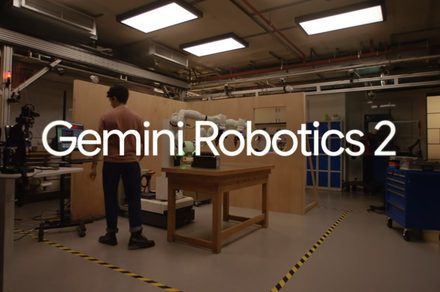
Google DeepMind has unveiled Gemini Robotics 2, a significant advancement in artificial intelligence specifically engineered for robotics, designed to equip humanoid robots with substantially enhanced capabilities in balance, manipulation, and collaborative operation. This sophisticated new AI model empowers robots to navigate complex and dynamic environments with markedly improved stability, handle delicate objects with greater precision and finesse, and work together more effectively as a cohesive unit, all while rigorously prioritizing human safety. The development represents a crucial and forward-looking step towards the creation of more versatile, adaptable, and seamlessly integrated robotic systems, poised for deployment across a wide spectrum of industrial, logistical, and potentially domestic settings.
Gemini Robotics 2 builds upon the foundational work of previous iterations by integrating cutting-edge AI techniques to address and overcome long-standing, persistent challenges in robot control and perception. The system's dramatically improved balance allows robots to traverse uneven terrain, adapt to shifting surfaces, and recover gracefully from unexpected disturbances or external forces. This resilience is a critical feature for real-world deployment, where environments are rarely perfectly controlled or static. Furthermore, the enhanced dexterity and fine motor control enabled by Gemini Robotics 2 allow robots to perform tasks requiring intricate manipulation, such as grasping and precisely positioning small or fragile items. These capabilities are essential for a multitude of applications, including advanced manufacturing processes, complex logistics and warehousing operations, and even sensitive tasks within the healthcare sector.
A particularly key innovation introduced with Gemini Robotics 2 is its advanced ability to foster sophisticated teamwork and coordination among multiple robots. The AI facilitates synchronized and intelligent coordinated actions, allowing individual robots to share real-time information, dynamically divide tasks, and collectively work towards achieving common goals with significantly greater efficiency and speed. This collaborative aspect is absolutely vital for scaling up robotic operations in complex, multi-robot scenarios, such as managing vast warehouse inventories, executing intricate assembly lines requiring synchronized movements, or performing large-scale environmental monitoring. Crucially, the system also incorporates advanced, multi-layered safety protocols, meticulously designed to ensure that robots can operate safely and reliably in close proximity to human workers and the general public without posing an undue risk. This paramount concern for safety is a fundamental prerequisite for the widespread adoption and societal acceptance of advanced robotics.
Google DeepMind's extensive research in this domain is strategically aimed at effectively bridging the persistent gap between the controlled environment of simulated robotic learning and the unpredictable realities of real-world application. By developing AI that can generalize learned skills and adapt them across different tasks, environments, and even robot morphologies, the company is actively paving the way for robots that are not only more intrinsically capable but also significantly more adaptable and robust. The Gemini Robotics 2 model is anticipated to substantially accelerate the development and deployment of next-generation robots that can perform a far wider range of complex tasks with greater autonomy, enhanced reliability, and improved safety, ultimately contributing to substantial increases in productivity and unlocking entirely new service possibilities across numerous industries.
Original source — read the full reporting at the publisher:
Read on Digital TrendsGet the weekly AI digest
AI news + new model releases, weekly. Drafted by our agents, reviewed by humans.