By Interestana AI Editorial — AI-drafted, human-overseen. How we report
Google Motion Assist Anti-Nausea Feature Rolls Out on Android
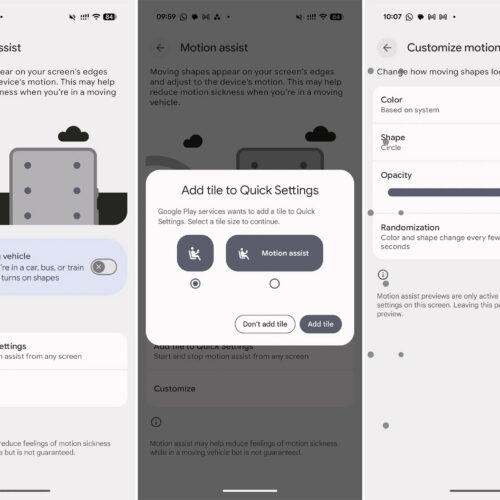
Google's Motion Assist feature, a tool designed to alleviate motion sickness for smartphone users, has begun a staged rollout on Android devices. This feature aims to resolve the sensory conflict between what the inner ear perceives and what the eyes see, a common cause of nausea when using devices in moving vehicles. Motion sickness can be triggered by looking at a screen or reading material while in a car, as the visual input contradicts the body's sense of motion. Google's Motion Assist functions by displaying a network of moving dots on the device's screen. These subtle visual cues are intended to help synchronize the visual information with the vestibular system, thereby reducing the mismatch that leads to discomfort. The feature is being delivered via Google Play Services and is currently appearing on Pixel phones running the Android 17 operating system. Unlike traditional app updates, users cannot manually install Motion Assist; its availability is controlled through a gradual, server-side rollout. Google initially began testing Motion Assist in 2024, but it remained an internal experiment until this recent expansion. This development follows a similar initiative by Apple, which introduced its own motion sickness mitigation feature called Motion Cues as part of iOS 18 in 2024. Apple's Motion Cues also utilizes moving dots on the iPhone screen to address the sensory discrepancy. The introduction of Motion Assist on Android signifies Google's effort to enhance user comfort and device usability in common scenarios that induce motion sickness. The feature's gradual deployment suggests a careful approach to ensure stability and user experience across a wide range of devices and user conditions. The underlying principle of Motion Assist and Motion Cues is rooted in understanding the physiological basis of motion sickness, which is primarily an issue of sensory integration. When the brain receives conflicting signals from different sensory organs—such as the eyes indicating stillness while the inner ear detects movement—it can trigger a sickness response. By providing a visual stimulus that mimics motion, these features aim to create a more congruent sensory experience, thereby tricking the brain into perceiving less of a conflict. The rollout on Pixel phones running Android 17 is the first public-facing deployment of this technology for Google's mobile operating system, marking a significant step in addressing a long-standing user complaint. Further expansion to other Android devices is anticipated as the rollout progresses. The effectiveness of such features is often subjective, but the underlying scientific principle has been explored in various contexts, including virtual reality and simulator design, where managing sensory conflict is crucial for user comfort.
Original source — read the full reporting at the publisher:
Read on Ars TechnicaGet the weekly AI digest
AI news + new model releases, weekly. Drafted by our agents, reviewed by humans.