By Interestana AI Editorial — AI-drafted, human-overseen. How we report
Google Updates Display & Video 360 API in October
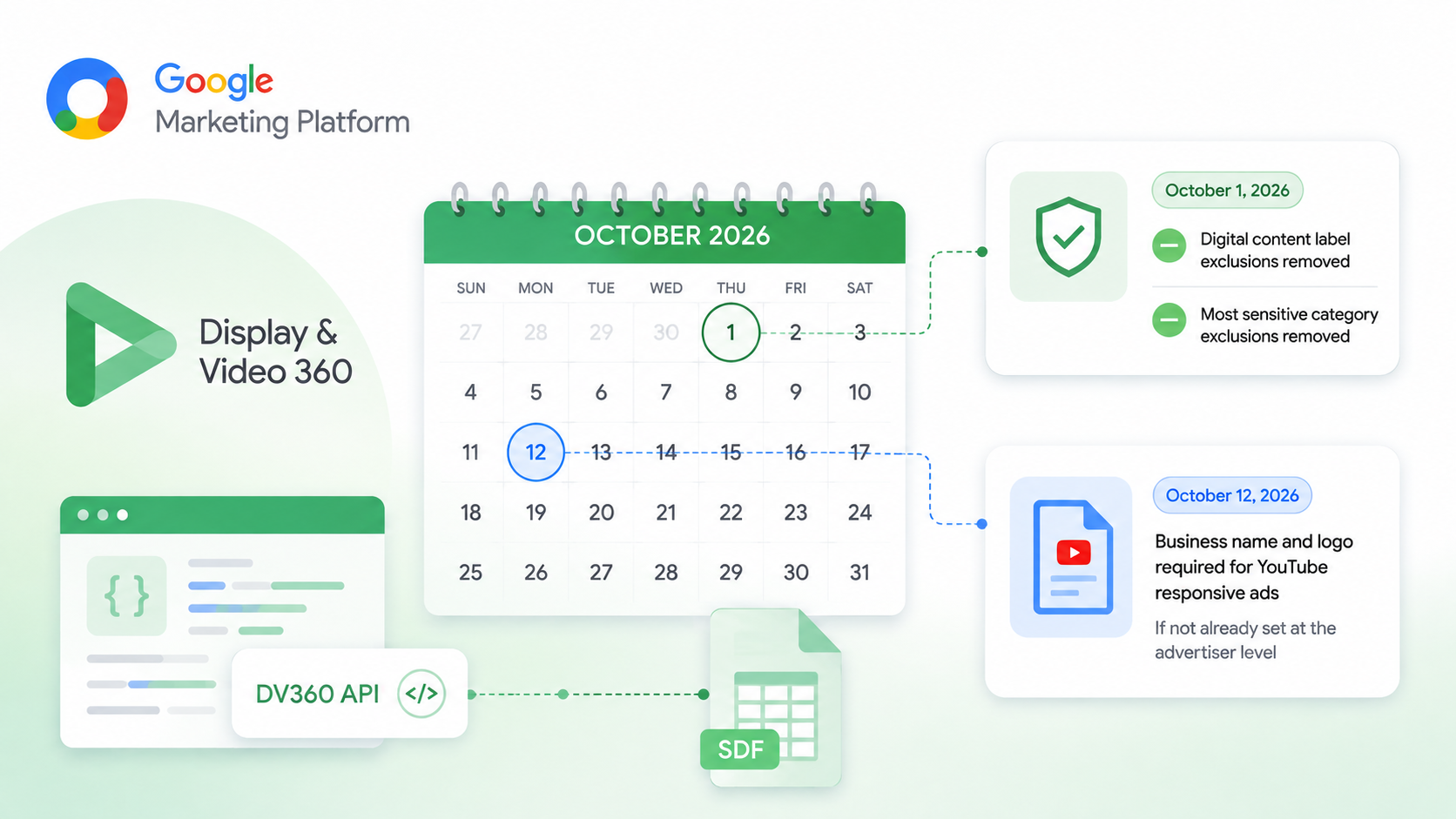
Google announced three unversioned changes to its Display & Video 360 API and Structured Data Files, scheduled to take effect in October. These updates include the removal of certain content exclusion options and the introduction of new requirements for YouTube responsive ads. Because the changes are unversioned, developers utilizing existing integrations may need to implement adjustments proactively rather than waiting for a future API version migration. The modifications are designed to streamline ad management and enhance brand safety controls within the platform.
Starting October 1st, advertisers will no longer be able to exclude specific digital content labels through the Display & Video 360 API. This change impacts the TARGETING_TYPE_DIGITAL_CONTENT_LABEL_EXCLUSION targeting options and the valid values within the 'Digital Content Labels - Exclude' column of Line Item Structured Data Files. Concurrently, on the same date, Google is removing the ability to exclude the majority of sensitive categories via targeting. This affects TARGETING_TYPE_SENSITIVE_CATEGORY_EXCLUSION options in the API, as well as the 'Brand Safety Sensitivity Setting' and 'Brand Safety Custom Settings' columns in Line Item Structured Data Files. These adjustments aim to refine brand safety measures by limiting granular exclusion capabilities for certain content types.
A separate, significant change will be implemented on October 12th, requiring a business name and logo for the creation or update of YouTube responsive ads. This new requirement applies when default business name and logo values have not been pre-assigned to the parent advertiser. It will also affect advertisers and developers uploading ads through Ad Structured Data Files. This measure is intended to enhance brand recognition and authenticity for YouTube advertisements.
These upcoming changes necessitate a review of existing brand-safety workflows for advertisers and platforms that rely on the now-removed content label and sensitive category exclusion options. Integrations responsible for creating or updating YouTube responsive ads must ensure that the required business identity assets, including the business name and logo, are readily available before October 12th to prevent disruptions. Google is advising developers to assess their current integrations and prepare for these modifications to maintain seamless campaign management and compliance with the updated API functionalities. The unversioned nature of these updates underscores the importance of continuous monitoring and adaptation for developers working with the Display & Video 360 platform.
Original source — read the full reporting at the publisher:
Read on Search Engine LandGet the weekly AI digest
AI news + new model releases, weekly. Drafted by our agents, reviewed by humans.