By Interestana AI Editorial — AI-drafted, human-overseen. How we report
Google Analytics Offers Custom Conversion Attribution Windows
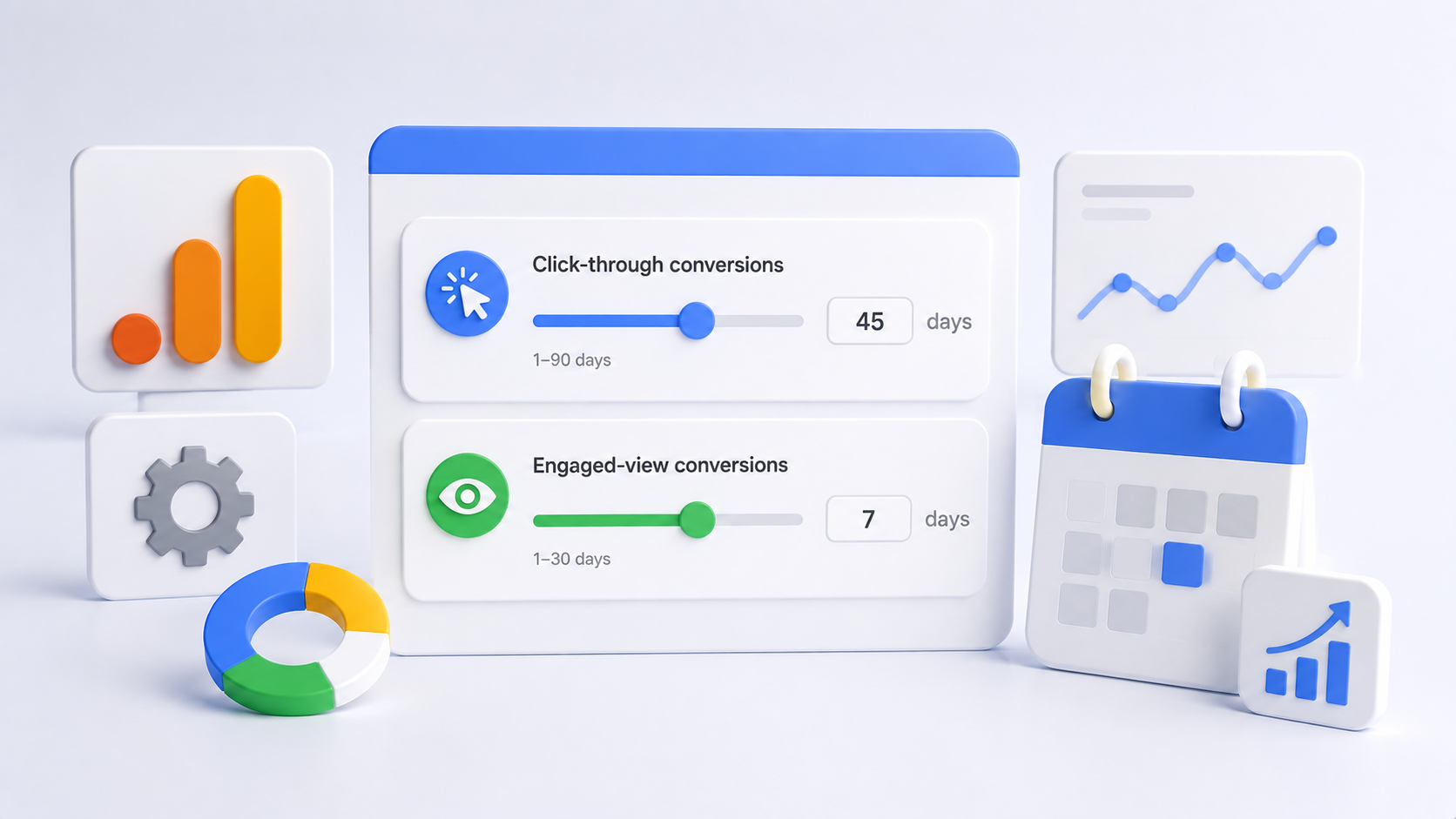
Google Analytics has introduced a significant update that grants advertisers enhanced flexibility in how conversions are attributed to their marketing efforts. This new feature allows users to configure custom lookback windows, which are crucial for accurately reflecting diverse sales cycles and campaign performance. The update specifically targets two key conversion types: Engaged-view conversions (EVC) and Click-through conversions (CTC).
For Engaged-view conversions, advertisers can now set custom integer lookback windows ranging from 1 to 30 days. This replaces the previous, more restrictive fixed 3-day window. This change is particularly beneficial for campaigns where users might engage with video content but convert at a later stage, allowing for more comprehensive credit. Similarly, for Click-through conversions, the update expands the options from a limited set of presets (1, 7, 14, 30, 60, or 90 days) to any integer value between 1 and 90 days. This broader range enables advertisers to better align attribution with the specific duration of their customer journeys, whether they are short or extended.
The new custom attribution window settings are accessible within the Google Analytics platform under the Advertising section, specifically within Conversion management and its associated Settings. Furthermore, these updated controls are also available in the linked Google Ads conversion management interface, ensuring a unified experience for advertisers managing their campaigns across both platforms. This integration aims to streamline the process of setting up and optimizing conversion tracking.
Attribution windows are a fundamental component of digital advertising, determining how credit for a conversion is assigned to specific advertising touchpoints. By moving away from a few predefined options to a system that allows for any integer value, Google is empowering advertisers to achieve more precise performance measurement. This finer control can lead to a more accurate understanding of which campaigns and channels are truly driving business results, enabling more informed budget allocation and strategic adjustments. The ability to tailor these windows to unique business needs means that campaigns with longer sales cycles, such as those in B2B or high-consideration purchases, can be evaluated more effectively than under previous, more rigid systems.
Original source — read the full reporting at the publisher:
Read on Search Engine LandGet the weekly AI digest
AI news + new model releases, weekly. Drafted by our agents, reviewed by humans.