By Interestana AI Editorial — AI-drafted, human-overseen. How we report
Google Ads Removes Language Targeting From Search Campaigns
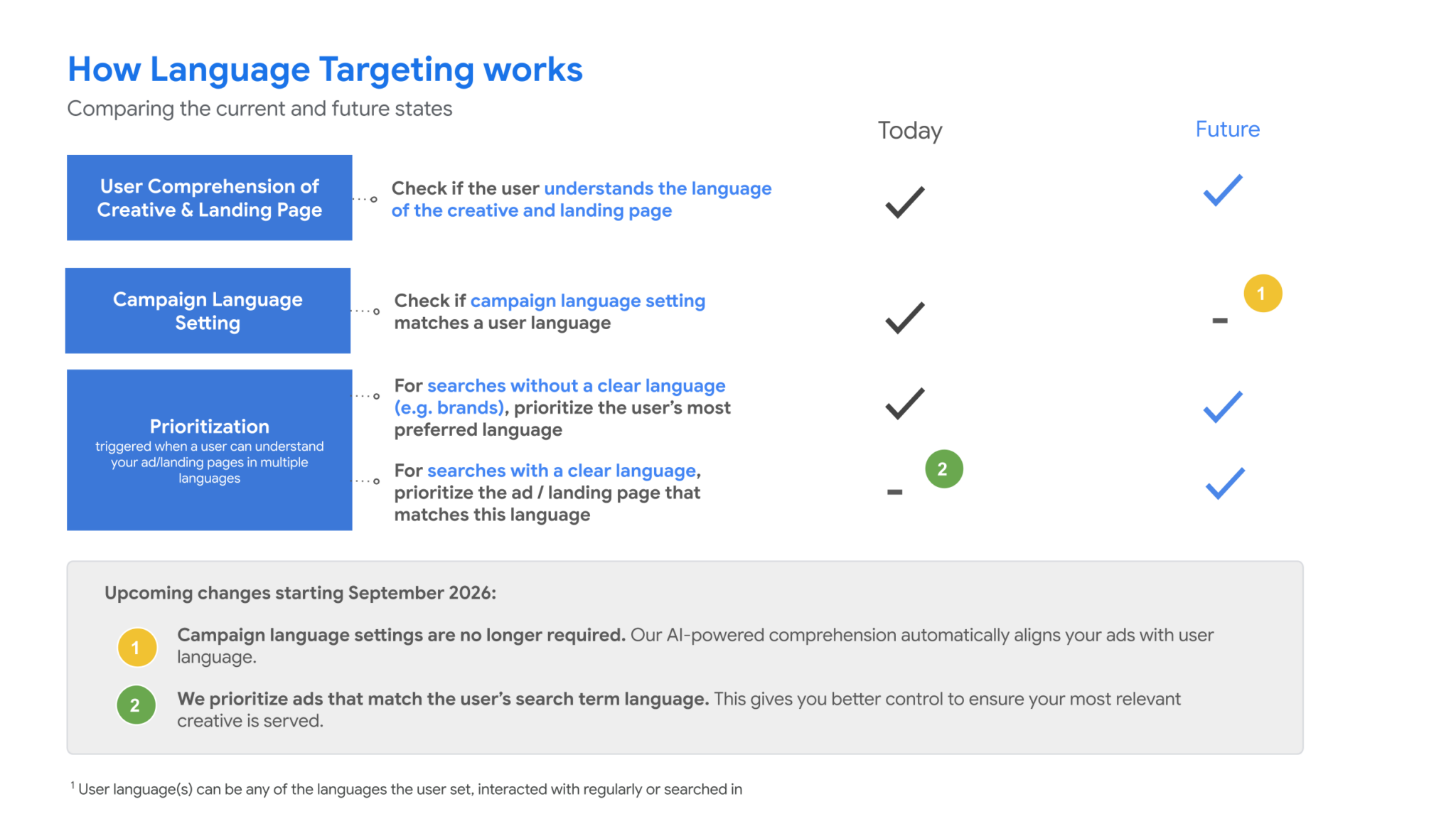
Google is eliminating campaign-level language targeting for Search and AI Max for Search campaigns starting in late September, transferring the responsibility for language matching to its automated systems. Instead of advertisers explicitly selecting target languages, Google will now determine which ads to serve primarily based on the language of the ad itself, augmented by signals indicating the languages a user understands. This shift means that for Search and AI Max for Search campaigns, the dedicated campaign-level language targeting setting will be removed. Google states that Search ads will automatically align with the language of the advertisements. Performance Max campaigns will experience a more intricate modification. For advertisements displayed on Google Search, campaign-level language settings will cease to be applicable, and language matching will function identically to standard Search campaigns. However, language targeting is not entirely disappearing from Performance Max. Language settings selected by advertisers will continue to influence ad delivery across platforms such as YouTube, Display, Discover, and Gmail. Additionally, Shopping ads within Performance Max campaigns will remain unaffected by these language setting changes. Google's approach to determining user language understanding extends beyond a user's interface language. On Search, contributing signals can encompass the language of the search query, the user's configured language settings, and other user preferences. Consequently, an individual whose browser is set to Spanish but who frequently conducts searches in English on Google might receive advertisements in either language. In scenarios where multiple eligible campaigns are present, Google indicates that AI-based ad group prioritization will be employed to identify which ad candidates possess the most relevant language for a given user. Google advises that no immediate action is required for existing campaigns. However, this change significantly elevates the importance of the languages employed within ad creative and on landing pages. Advertisers operating multilingual campaigns are encouraged to ensure their advertisements and destination pages are clearly structured in their intended languages, as these elements will serve as key signals for Google's automated matching process. The company's move reflects a broader trend towards leveraging AI and machine learning to automate and optimize advertising delivery, aiming for more precise targeting and improved campaign performance by relying on a wider array of contextual signals rather than solely on explicit advertiser settings.
Original source — read the full reporting at the publisher:
Read on Search Engine LandGet the weekly AI digest
AI news + new model releases, weekly. Drafted by our agents, reviewed by humans.