By Interestana AI Editorial — AI-drafted, human-overseen. How we report
George Martin's AI Lesson: Possibility Over Abundant Answers
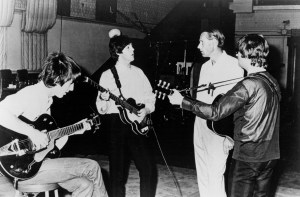
The leadership lesson for the age of artificial intelligence can be found in the collaboration between The Beatles and their producer, George Martin. In 1965, Paul McCartney presented a new song, "Yesterday," to Martin, seeking input. Martin, hearing potential beyond McCartney's initial vision, suggested incorporating a string quartet into a rock record, a novel idea at the time. Despite McCartney's initial resistance, Martin's persistence led to the creation of one of history's most recorded songs. This anecdote underscores a critical leadership principle: the most valuable individual in a group may not be the one with the most immediate answers, but rather the one who perceives possibilities others miss.
The current era, characterized by the proliferation of artificial intelligence, has led to an abundance of answers. AI systems can now generate business plans, diagnose medical conditions, analyze financial markets, draft legal documents, develop software, and offer strategic recommendations with unprecedented speed. Tasks that once required extensive teams of highly trained professionals are becoming accessible to a broader audience through AI. This widespread availability of answers means that possessing them alone is no longer a significant competitive advantage. The core of this argument is that when answers become commonplace, their inherent value diminishes, shifting the focus to other critical leadership attributes.
George Martin's contribution to The Beatles exemplifies this shift decades before the advent of AI. He was not a more accomplished songwriter than John Lennon or Paul McCartney, nor a more skilled musician than George Harrison or Ringo Starr. His unique value lay in his distinct perception of possibilities, evident in his innovative approaches to orchestration, tape experimentation, and his willingness to provide candid feedback on the band's material. This suggests that the true promise of AI is not to supplant human creativity but to amplify it, provided leaders understand how to leverage it effectively. This contrasts with many current organizational approaches to AI, which often focus on optimizing execution and efficiency without questioning the fundamental direction or strategy.
Many organizations today are rapidly deploying AI to generate timelines, establish milestones, create decision trees, and produce Gantt charts. Teams efficiently identify objectives and devise the quickest paths to achieve them. However, this focus on flawless execution and rigorous analysis often neglects a more fundamental question: whether the chosen map or strategy is the correct one. The danger lies in optimizing for the wrong goals or pursuing a path that, while efficient, does not lead to the desired outcome. The George Martin example serves as a reminder that true innovation and impactful leadership in the AI era require not just the ability to find answers quickly, but the foresight to identify and pursue the right possibilities, even when they challenge conventional thinking.
Original source — read the full reporting at the publisher:
Read on FortuneGet the weekly AI digest
AI news + new model releases, weekly. Drafted by our agents, reviewed by humans.