By Interestana AI Editorial — AI-drafted, human-overseen. How we report
AI Search Engines Differ in Content Selection Mechanisms
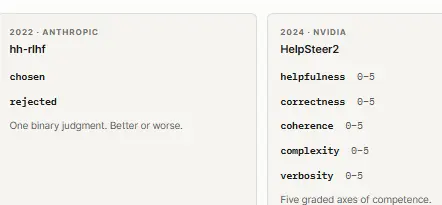
The four major AI search engines—ChatGPT, Claude, Gemini, and Perplexity—while sharing a foundational training methodology, exhibit distinct mechanisms in how they determine and present information, a critical factor for content creators and marketers seeking visibility. All four platforms utilize a similar core training process involving pretraining on vast datasets, instruction tuning to refine response generation, and preference optimization to align outputs with user expectations. However, the specific tuning and emphasis on different aspects of this process lead to divergent outcomes in their search results and content surfacing strategies. Publicly available data on preference training datasets reveal a significant evolution from a simple binary judgment (accept or reject) to a more nuanced five-axis grading rubric. This newer rubric appears to favor responses that are structured and presented in a list format, suggesting a preference for organized and easily digestible information.
Perplexity distinguishes itself by heavily relying on live web retrieval and providing explicit citations for its generated answers. This approach prioritizes real-time information and transparency, allowing users to verify the sources of the AI's responses. Claude, developed by Anthropic, is noted for its strength in providing in-depth analysis and long-form reasoning. Its tuning seems to favor comprehensive explanations and detailed explorations of topics, making it suitable for users seeking detailed understanding. ChatGPT, from OpenAI, aims for broad applicability, designed to handle a wide array of use cases and user queries, making it a versatile tool for general information retrieval and task completion. Gemini, Google's AI model, leverages native access to Google's extensive ecosystem, potentially giving it an advantage in integrating and surfacing information from Google's vast index of data and services.
It is crucial to understand that third-party benchmark testing for AI performance is a dynamic field, with comparisons and rankings shifting frequently. Therefore, any single benchmark should be viewed as a temporary snapshot rather than a definitive, permanent assessment of an AI engine's capabilities or ranking methodology. Measuring the visibility of content within these AI search environments requires a multifaceted approach. This includes monitoring citation frequency, tracking brand mentions across AI-generated content, and assessing the diversity of sources that AI models draw upon, rather than solely focusing on traditional keyword rankings. The proprietary nature of these AI ranking algorithms means that precise formulas remain undisclosed by OpenAI, Anthropic, Google, and Perplexity, and these systems are subject to continuous updates and adjustments.
Understanding these platform-specific nuances is essential for effective AI search engine optimization (SEO). Treating "optimize for AI search" as a monolithic strategy overlooks the distinct operational mechanics of each engine. For instance, content optimized for Perplexity's citation-heavy approach might differ significantly from content tailored for Claude's emphasis on deep reasoning or ChatGPT's broad utility. Gemini's integration with Google's ecosystem suggests that content already well-indexed by Google might have an advantage. The shift towards structured, list-based answers, as indicated by evolving preference training, also implies that content creators should focus on organizing information clearly and concisely. Ultimately, successful AI visibility hinges on adapting tactics to the specific characteristics and evolving preferences of each major AI search platform.
Original source — read the full reporting at the publisher:
Read on Neil PatelGet the weekly AI digest
AI news + new model releases, weekly. Drafted by our agents, reviewed by humans.