By Interestana AI Editorial — AI-drafted, human-overseen. How we report
Gandhi's Handwritten Freedom Movement Notes Sell For $1.69 Million
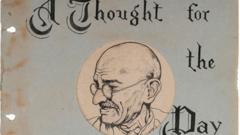
Mahatma Gandhi's personal handwritten notes, documenting significant events in India's freedom movement and his intimate relationships, were sold for $1.69 million at an auction in India on June 18, 2024. The collection, comprising 100 pages, offers a unique glimpse into the leader's thoughts and activities during a transformative period in Indian history. These documents are considered invaluable historical artifacts, providing direct insight into Gandhi's strategic planning and personal reflections.
The notes detail key moments such as the Dandi March, also known as the Salt March, a pivotal act of nonviolent civil disobedience against the British salt tax. This event, which took place in March and April 1930, involved Gandhi and his followers marching 240 miles from Sabarmati Ashram to the coastal village of Dandi to produce salt illegally. The auctioned papers also shed light on Gandhi's interactions with his close associates, including his personal secretary, Mahadev Desai, whose diaries and correspondence are often intertwined with Gandhi's own writings. Desai served Gandhi for over two decades and was privy to many of his most private thoughts and plans.
This sale highlights the enduring global interest in Mahatma Gandhi and the Indian independence movement. The auction, conducted by the Indian auction house Shastry's, saw competitive bidding from collectors and institutions eager to acquire a piece of history. The final price of $1.69 million (approximately ₹14 crore) surpassed pre-auction estimates, underscoring the perceived historical and monetary value of such personal memorabilia. The proceeds from the sale are expected to be reinvested in heritage preservation efforts, according to statements made by the auction house.
The collection's significance extends beyond its monetary value. It provides primary source material for historians and scholars studying Gandhi's philosophy of nonviolence (Satyagraha) and his leadership. The personal nature of the notes allows for a deeper understanding of the man behind the icon, revealing his struggles, convictions, and the human element of his monumental leadership. The documents are expected to be studied and preserved, ensuring their accessibility for future generations interested in the history of India's struggle for independence and the life of one of its most revered figures.
Original source — read the full reporting at the publisher:
Read on BBC World NewsGet the weekly AI digest
AI news + new model releases, weekly. Drafted by our agents, reviewed by humans.