Iran's Former Supreme Leader's Funeral Becomes Political Event
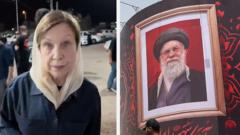
The funeral ceremonies for Iran's former Supreme Leader, Ayatollah Ruhollah Khomeini, are expected to be a profoundly political event, drawing an estimated 20 million mourners. These ceremonies are scheduled to take place over several days across Iran and Iraq, highlighting the enduring significance of Khomeini's legacy and the current political landscape.
Authorities are preparing for massive crowds, with logistical plans in place to manage the influx of people expected to pay their respects. The sheer scale of expected attendance underscores the deep reverence many Iranians hold for Khomeini, who led the 1979 revolution and established the Islamic Republic. His passing remains a pivotal moment in Iranian history, and his funeral continues to be a focal point for national sentiment and political discourse.
The dual locations of the ceremonies in both Iran and Iraq are also noteworthy. While the primary events will occur within Iran, significant gatherings are anticipated in Iraq, particularly in Najaf, a holy city for Shia Muslims and a place deeply connected to Khomeini's early religious and political activities. This transnational dimension of the funeral underscores the broader influence of Iran's revolution and its leadership within the Shia world.
The political implications of such a large-scale public gathering are substantial. It provides a platform for national unity and remembrance but also presents an opportunity for the current leadership to project strength and continuity. The government's management of these events will be closely watched, both domestically and internationally, as a reflection of its control and the public's mood. The extensive security and organizational efforts reflect the high stakes associated with commemorating such a foundational figure of the Islamic Republic.
Original source — read the full reporting at the publisher:
Read on BBC World News