By Interestana AI Editorial — AI-drafted, human-overseen. How we report
MoMA's 'It's Alive!' Exhibition Charts a Century of Pre-Digital Animation
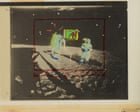
The Museum of Modern Art (MoMA) in New York City is presenting "It's Alive!," a significant exhibition that meticulously traces the evolution of animation across the 100 years that preceded the transformative advent of digital technology. Curated by MoMA's own Ron Magliozzi, the show aims to illuminate the medium's rich and diverse history, moving beyond the simplistic, character-driven narratives that often dominate public perception. The exhibition's title itself, "It's Alive!," evokes the very essence of animation – the creation of life and movement from static images, a concept that has captivated audiences for generations.
Magliozzi emphasizes that while early animation, exemplified by iconic figures like Felix the Cat, often focused on anthropomorphic animals engaged in whimsical antics, the field's potential extended far beyond these initial offerings. A pivotal moment in this artistic expansion, according to Magliozzi, occurred in 1946 with the release of director John Hubley's influential manifesto, "Animation Warrants a New Language." Hubley, a prominent animator known for his work on early Disney features and later for his independent films, penned this brief but potent document to advocate for a radical shift in the medium. His manifesto called for animators to "go beyond pigs and bunnies," urging a departure from the prevailing, often simplistic, storytelling conventions. Hubley envisioned animation as a sophisticated art form capable of conveying complex ideas, emotions, and social commentary, thereby "doing the kind of animation that can do much more" than mere entertainment.
"It's Alive!" situates itself within this broader historical context, exploring the period from the early 20th century up to the cusp of the digital revolution. This 100-year span encompasses a vast array of techniques and artistic movements, from the pioneering hand-drawn cel animation that defined early Hollywood cartoons to the intricate stop-motion artistry and experimental avant-garde works that pushed the boundaries of visual expression. By focusing on this pre-digital era, the exhibition provides a crucial opportunity to appreciate the foundational craftsmanship, ingenuity, and artistic vision that shaped animation into a powerful storytelling medium. It allows viewers to examine the labor-intensive processes, the meticulous attention to detail, and the sheer creative force required to bring animated worlds to life before the advent of computer-generated imagery (CGI) fundamentally altered the landscape of production and aesthetics. The exhibition, therefore, serves as a testament to the enduring power of analog animation and its profound impact on visual culture, from early cinematic marvels to the formative years of television animation and the nascent stages of music video production, such as those seen on early MTV.
Original source — read the full reporting at the publisher:
Read on The Guardian CultureGet the weekly AI digest
AI news + new model releases, weekly. Drafted by our agents, reviewed by humans.