By Interestana AI Editorial — AI-drafted, human-overseen. How we report
French Inflation Slows to 17-Month Low on Falling Energy Costs
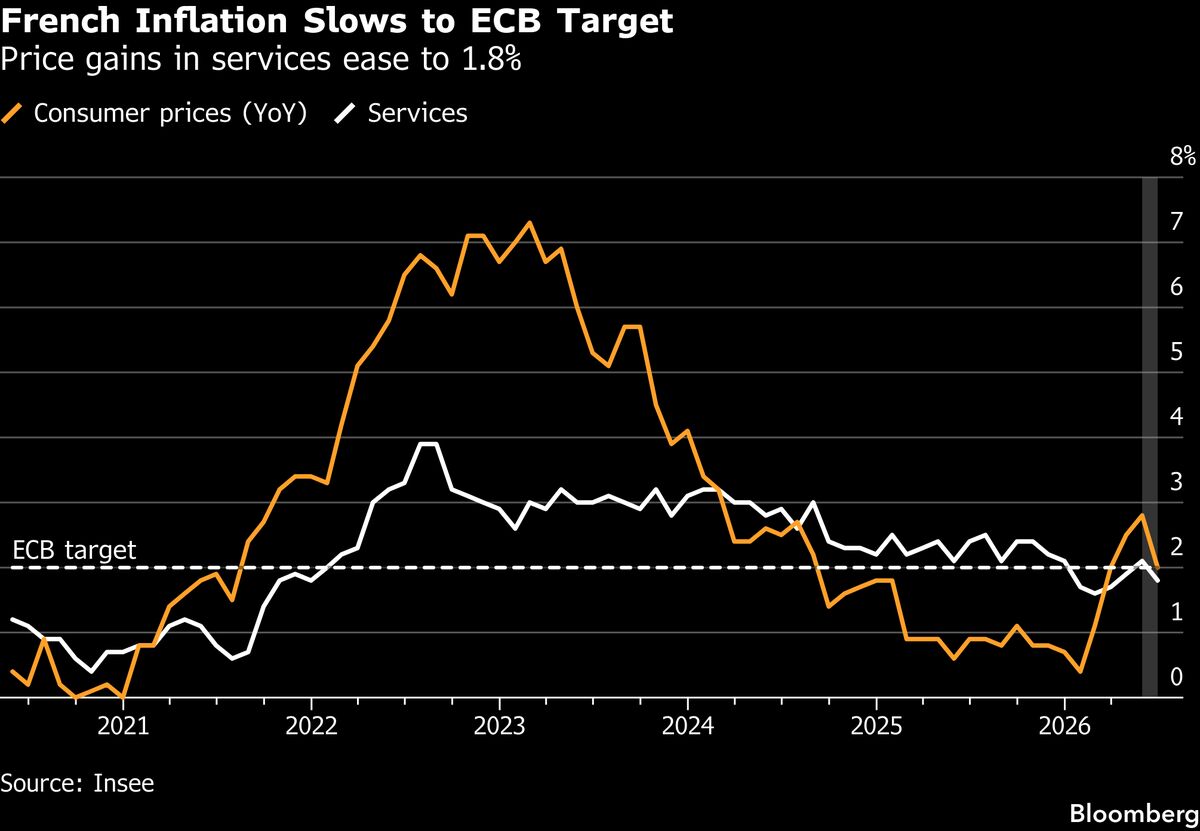
French inflation decelerated to 3.5% year-on-year in November, marking its lowest level since June 2022, according to preliminary data released by the National Institute of Statistics and Economic Studies (INSEE) on November 30, 2023. This marks a notable slowdown from the 4.9% inflation rate recorded in October and offers a significant reprieve from the persistent price pressures that have impacted the French economy.
The primary driver behind this deceleration is a sharp decrease in energy prices, which fell by 4.1% in November compared to the same month in the previous year. This decline in energy costs, particularly for oil and gas, has had a direct impact on consumer spending and has eased inflationary pressures across various sectors. Food prices, while still elevated, also saw a slight moderation, increasing by 7.1% in November, down from 9.7% in October.
Core inflation, which excludes volatile items like energy and food, also showed signs of cooling, decreasing to 4.2% in November from 4.5% in October. This suggests that underlying inflationary pressures are beginning to abate, which could influence future monetary policy decisions by the European Central Bank (ECB). The ECB has been actively working to bring inflation back to its 2% target, and this easing in France could be a positive indicator for the wider Eurozone.
The INSEE report also indicated that the overall price index for manufactured goods decreased by 0.2% in November, while services inflation remained steady at 3.1%. The slowdown in French inflation provides a more optimistic outlook for household purchasing power and could potentially lead to increased consumer confidence in the coming months. This development is being closely watched by economists and policymakers as they assess the broader economic landscape of the Eurozone.
Original source — read the full reporting at the publisher:
Read on Bloomberg MarketsGet the weekly AI digest
AI news + new model releases, weekly. Drafted by our agents, reviewed by humans.