By Interestana AI Editorial — AI-drafted, human-overseen. How we report
Freiburg Baroque Orchestra and Sir Simon Rattle illuminate Schumann's 'problem' works with Isabelle Faust
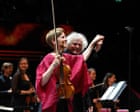
Sir Simon Rattle, a conductor renowned for his adventurous programming, led the Freiburg Baroque Orchestra in an all-Schumann concert at London's Royal Albert Hall on September 8, 2026. The program focused on three of Robert Schumann's more challenging and historically overlooked compositions: the overture to his opera "Genoveva," his Violin Concerto, and a symphony composed during a period of profound personal depression. This ambitious undertaking was further complicated by the Royal Albert Hall's notoriously difficult acoustics for period instrument ensembles, which often favor the richer, more projecting sound of modern orchestras. Nevertheless, Rattle and the Freiburg Baroque Orchestra, celebrated for their historically informed performances utilizing period instruments, managed to create an "exceptional evening" that revealed the intricate beauty and emotional depth of these "problem" works.
The concert opened with the overture to "Genoveva." Rather than relying on brute force, Rattle and the orchestra masterfully drew the audience into the opera's dramatic narrative through nuanced musical storytelling. The quartet of horns was particularly singled out for its striking contribution, adding a rich, romantic texture. While the overture, composed in 1848, might have sounded stylistically dated to contemporary audiences, this performance imbued it with a vibrant sense of "romance and chivalry," demonstrating its enduring musical merit.
The Violin Concerto, a work with a particularly fraught reception history, featured Isabelle Faust as the soloist. Schumann's executors famously deemed the concerto disappointing enough to be locked away for a century, a testament to its initial perceived shortcomings. However, under Rattle's insightful direction and Faust's "spirited and graceful" interpretation, the concerto was presented with remarkable clarity and emotional resonance. The performance aimed to transcend its historical baggage, allowing the intrinsic musical qualities and Schumann's original intentions to shine through, proving its worth to a modern audience.
Rattle's deliberate choice to program these less frequently performed and historically challenging pieces, including a symphony born from Schumann's deep struggles with mental health, underscores his commitment to exploring the full spectrum of a composer's output. The success of the evening was a testament to both Rattle's interpretive acumen and the Freiburg Baroque Orchestra's technical virtuosity and sensitive musicianship. This concert offered a compelling argument for the continued re-evaluation and appreciation of Schumann's more enigmatic compositions, proving that even works burdened by difficult histories can achieve brilliance under expert guidance and a fresh perspective.
Original source — read the full reporting at the publisher:
Read on The Guardian CultureGet the weekly AI digest
AI news + new model releases, weekly. Drafted by our agents, reviewed by humans.