By Interestana AI Editorial — AI-drafted, human-overseen. How we report
Beatles' Abbey Road Cover Captures Band's Dynamic
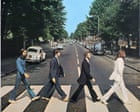
The iconic album cover for The Beatles' "Abbey Road," photographed on August 8, 1969, is celebrated not solely for the image of the four band members crossing a zebra crossing, but also for the evocative street scene behind them. The vanishing perspective of the north London road, leading towards a clear blue sky and partially veiled by summer trees, contributes to a sense of hyperrealism, drawing parallels to the artistic style of David Hockney. The stark black and white stripes of the zebra crossing, along with the white dividing line of the receding road, are rendered with a crispness that enhances the clarity of this seemingly psychedelic daydream. This visual composition has been widely copied and parodied, underscoring its enduring impact on popular culture.
While the background elements contribute significantly to the cover's aesthetic appeal, the presence of the four band members—John Lennon, Paul McCartney, George Harrison, and Ringo Starr—is undeniably central. By August 1969, The Beatles had achieved a level of transcendent fame that transformed an ordinary act, such as crossing a street, into a moment of profound significance and intrigue. The photograph, taken by Iain Macmillan, captures a specific dynamic between the individuals and the collective entity of the band with an almost eerie perfection. Each member walks in a distinct manner, contributing to the overall narrative of their individual journeys within the unified group.
The "Abbey Road" album itself was released on September 26, 1969, and became one of the best-selling albums of all time. The cover art has become as famous as the music, symbolizing the band's final recording sessions together, though "Let It Be" was released later. The location, Abbey Road Studios in London, has become a pilgrimage site for fans worldwide, with the zebra crossing outside the studios being a particularly popular spot for photographs, replicating the album cover's pose. This enduring fascination highlights the cover's success in capturing a moment that is both mundane and magical, reflecting the complex relationship and individualities of the band members at a pivotal point in their career.
The artistic choices made for the "Abbey Road" cover were deliberate, aiming to create a powerful visual statement that complemented the music. Iain Macmillan, a friend of John Lennon, was given only ten minutes to capture the shot. The band members walked across the zebra crossing six times, with Macmillan taking photographs from a stepladder. The final image was chosen for its unique composition and the way it visually represented the band's journey and their individual personas. The simplicity of the scene, combined with the extraordinary fame of its subjects, created a paradox that has resonated with audiences for decades, cementing the "Abbey Road" cover as one of the most recognizable and celebrated album artworks in history.
Original source — read the full reporting at the publisher:
Read on The Guardian CultureGet the weekly AI digest
AI news + new model releases, weekly. Drafted by our agents, reviewed by humans.