By Interestana AI Editorial — AI-drafted, human-overseen. How we report
AI Disrupts Org Charts, Demands Employee 'Unlearning'
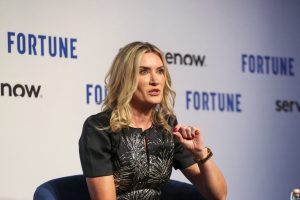
Chief People Officers from Fortune 500 companies are observing a significant disruption in traditional organizational structures due to the widespread adoption of artificial intelligence. Stacy Dillow, executive vice president and chief people officer at HPE, emphasized at Fortune's AIQ Summit that the primary challenge lies not in technological experimentation, but in fundamentally rethinking how work is performed and the established corporate frameworks. Dillow stated that companies must actively change their work processes, rather than attempting to integrate AI into outdated systems that will not yield different outcomes. This imperative for transformation is increasingly falling on corporate leadership as AI transitions from an experimental phase to an integral component of daily business operations. Dillow asserted that C-suite executives who are not actively engaged in AI adoption, implementation, or strategic transformation planning are failing to fulfill their roles and that embracing AI is essential for organizational survival.
Danielle Gonzalez, chief people officer at Palo Alto Networks, is witnessing this evolution firsthand within her cybersecurity company. Palo Alto Networks has provided employees with access to AI tools such as NotebookLM, Claude, and Gemini for exploration and use. The company has also developed a custom AI agent that has achieved an 83% reduction in IT support tickets and now autonomously manages workflows across human resources, finance, and legal departments. Gonzalez explained that employees are now self-serving by posing questions directly to the AI agent, which then accesses relevant information to provide accurate answers tailored to the employee's specific role and global context. This shift signifies a move away from traditional reliance on HR business partners or departmental personnel for information and task completion.
ServiceNow reports that while most organizations view AI as a valuable investment, only 9% have made substantial progress in developing complex autonomous workflows. This statistic highlights the gap between AI adoption and the implementation of sophisticated AI-driven operational efficiencies. The ongoing integration of AI necessitates a workforce capable of continuous learning and adaptation. Employees who thrive in this new environment will need to embrace a mindset of "unlearning" outdated practices and acquiring new skills to effectively leverage AI technologies. The concept of "tokenmaxxing," which refers to employees optimizing their use of AI tools, is becoming a common discussion point as individuals seek to maximize their productivity and value within AI-integrated workplaces. The fundamental change AI brings to the workplace requires a reevaluation of employee roles, skill sets, and the very definition of organizational structure, moving away from rigid hierarchies towards more fluid and AI-augmented operational models.
Original source — read the full reporting at the publisher:
Read on FortuneGet the weekly AI digest
AI news + new model releases, weekly. Drafted by our agents, reviewed by humans.