By Interestana AI Editorial — AI-drafted, human-overseen. How we report
Ex-SpaceX Engineers Launch Robotic Steel Factory Startup
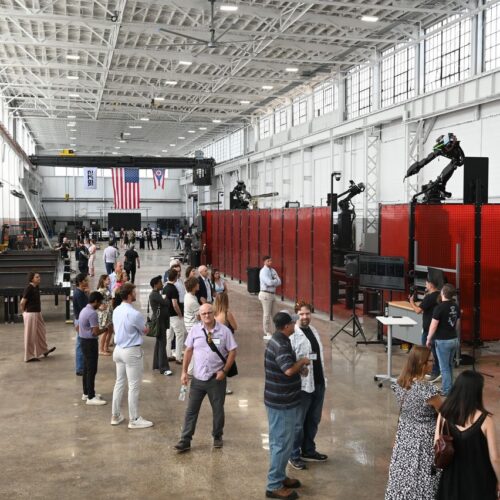
Three former SpaceX engineers have pivoted from aerospace to industrial manufacturing, establishing a new startup named 1872. This company is dedicated to revolutionizing the production of steel components through the integration of AI-driven software and advanced robotics. Their primary objective is to establish a prototype factory capable of automating a significant portion of the steel fabrication process for critical infrastructure parts by the year 2027. The official launch of 1872 occurred on July 22, marked by a ribbon-cutting ceremony at their inaugural facility, dubbed Factory One, located in Cincinnati, Ohio.
Initially, 1872 is concentrating its efforts on automating the manufacturing of steel skids. These are described as rectangular steel frames that serve as foundational elements for modular buildings, offering a stable and moveable base. The company intends to supply these automated steel components to clients involved in the development of AI data centers and small modular nuclear reactors, sectors that require robust and precisely manufactured structural elements. This strategic focus aligns with the growing demand for specialized infrastructure to support emerging technologies and energy solutions.
Dan Summers, the CEO of 1872, articulated the company's approach to automation in an interview, stating, "We're building towards autonomy, but we're not necessarily building in a dogmatic fashion towards full autonomy." He further elaborated that the company might achieve a high level of automation, potentially around 80 percent, and strategically decide to halt further automation if the returns diminish significantly. This pragmatic stance suggests a focus on achieving operational efficiency and cost-effectiveness rather than pursuing absolute, potentially impractical, full autonomy. The company's strategy emphasizes a balanced integration of human oversight and robotic capabilities to optimize the manufacturing process.
The transition from rocket engineering to steel fabrication highlights a broader trend of applying advanced technological principles, honed in the demanding aerospace industry, to solve challenges in other sectors. The use of AI and robotics in manufacturing is expected to increase efficiency, reduce costs, and improve the quality and consistency of produced parts. 1872's venture into this space signifies a commitment to leveraging cutting-edge technology to address the foundational needs of rapidly expanding industries like artificial intelligence and advanced nuclear power, aiming to streamline the supply chain for essential infrastructure components.
Original source — read the full reporting at the publisher:
Read on Ars TechnicaGet the weekly AI digest
AI news + new model releases, weekly. Drafted by our agents, reviewed by humans.