By Interestana AI Editorial — AI-drafted, human-overseen. How we report
Augmental MouthPad Offers Tongue-Controlled Computer Interface
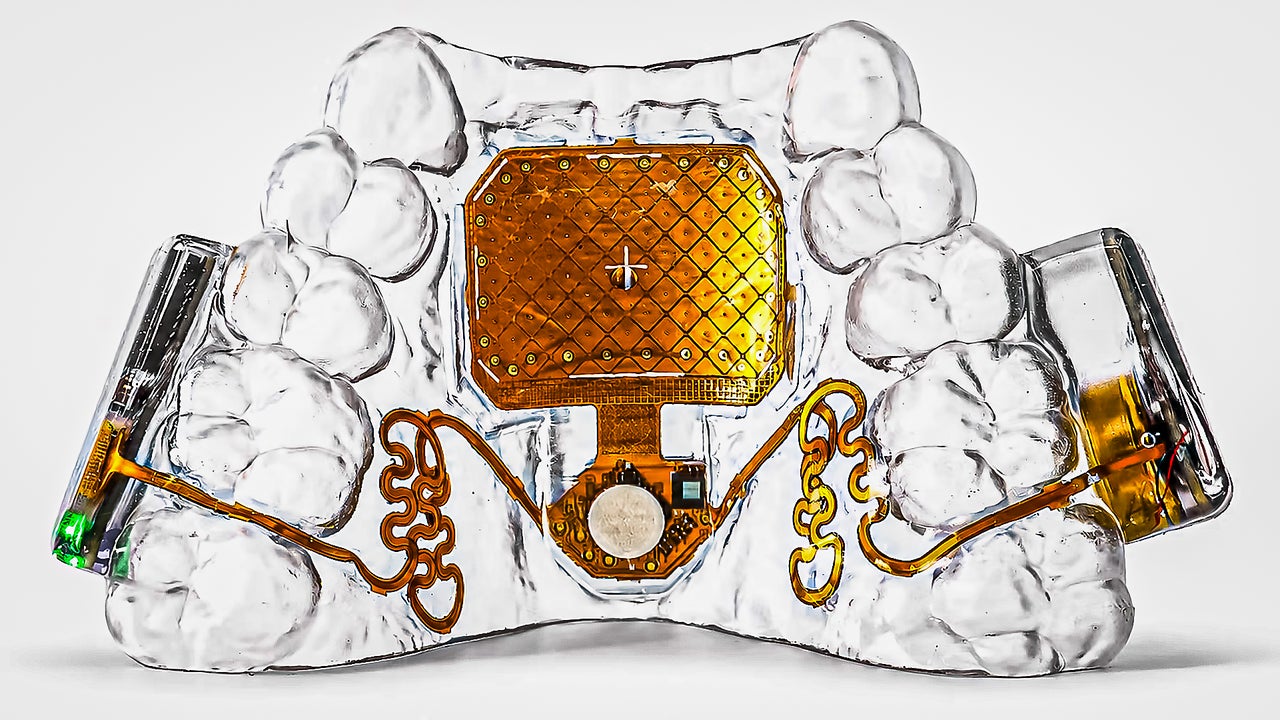
Augmental, a startup co-founded by former Neuralink employee Tomás Vega and Corten Singer, has developed the MouthPad, a novel human-computer interface that utilizes tongue movements to control digital devices. Vega, who previously worked at Elon Musk's Neuralink on implantable brain-computer interfaces, left the company with the goal of creating an assistive technology that could provide immediate help to individuals with disabilities without requiring surgery. He was motivated by the desire to offer solutions sooner to people with conditions like quadriplegia, who he felt could not afford to wait for the long development timelines of invasive brain-computer interfaces. The MouthPad is designed as a discreet, non-surgical alternative, aiming to be as expressive as an implant but without the associated constraints.
The MouthPad resembles a partial dental retainer that is positioned against the user's palate and back molars. At its core is a capacitive trackpad. The device translates specific tongue actions into computer commands: a press with positive pressure on the trackpad functions as a left-click, while a sip with negative pressure acts as a right-click. In its tongue-control mode, the precise location of the tongue's touch on the trackpad is interpreted as a virtual joystick, allowing for directional cursor movement. For users with head mobility, a head-control mode is available. This mode leverages the device's internal gyroscopes to move the cursor based on head movements, while tongue touches continue to operate virtual buttons for scrolling actions, both vertically and horizontally.
Augmental's approach diverges from the premise that high-agency human-computer interaction necessitates surgery or that assistive technologies must be visibly apparent. The MouthPad's design philosophy centers on leveraging an individual's existing abilities, with the proposition that the most effective assistive technology might be one that grants control without altering the user's appearance or making the technology's use conspicuous. Vega describes the device as a "mouse that disappears into your mouth." The company emphasizes a "people-first" approach, where technology is intended to become so integrated and unobtrusive that the user's capabilities, rather than the assistive device, are the primary focus. This philosophy aims to provide a more natural and integrated user experience for individuals seeking enhanced control over their digital environments. The development represents a significant step in exploring non-invasive methods for advanced human-computer interaction, particularly for accessibility applications.
Original source — read the full reporting at the publisher:
Read on Fast CompanyGet the weekly AI digest
AI news + new model releases, weekly. Drafted by our agents, reviewed by humans.