By Interestana AI Editorial — AI-drafted, human-overseen. How we report
Lake Suchitlán Pollution Mystery Persists a Year Later
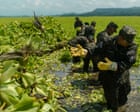
Thousands of dead fish washed ashore on El Salvador's Lake Suchitlán, the country's largest freshwater body and hydroelectric reservoir also known as Cerrón Grande, in August 2025, leaving local fishers without answers. Noel Avalos of Copapayo village recounted the morning residents discovered the mass die-off. In the months following the initial event, nearly 70% of the lake's 135 sq km surface became covered by an invasive species, water lettuce (Pistia stratiotes). This ecological disruption has been accompanied by accumulating plastic waste along the shoreline and a recurrence of dead fish, severely impacting the livelihoods of those who depend on the lake for income.
Despite the persistent environmental issues, no official explanation for the initial fish kill or the ongoing pollution has been provided by the El Salvadoran government. The Ministry of Public Works announced efforts to remove the water lettuce in October 2025, but the problem appears to have continued. Residents and fishers are still seeking clarity on the causes of the deteriorating water quality and the ecological damage to the lake.
The situation at Lake Suchitlán highlights a significant environmental challenge for the region, affecting both its natural resources and the economic stability of its communities. The continued presence of invasive species and plastic waste suggests a complex and unresolved pollution issue that has persisted for over a year since the initial alarming discovery of dead fish.
Original source — read the full reporting at the publisher:
Read on The Guardian EnvironmentGet the weekly AI digest
AI news + new model releases, weekly. Drafted by our agents, reviewed by humans.